
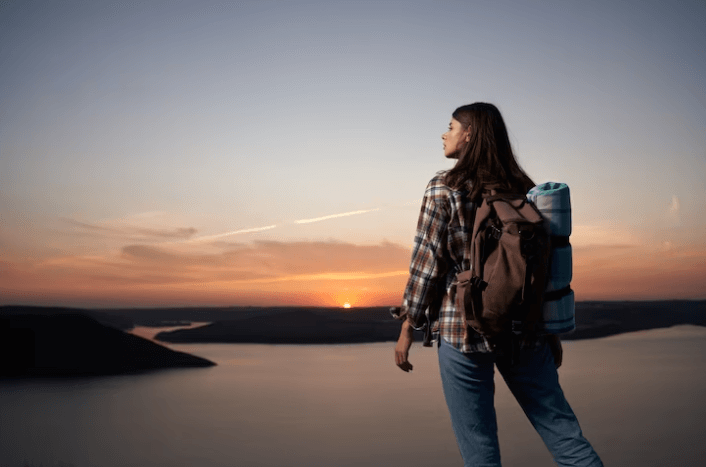
Traveling alone is not just a different way to see the world. It is a different way to experience yourself. This article explores why solo travel reshapes identity, perception, confidence, and emotional regulation more deeply than shared journeys.
Introduction: The Unique Impact of Traveling Alone
Traveling with others is familiar.
Traveling alone is confronting.
The absence of shared reference points changes how you move, decide, and feel.
Solo Travel Removes Social Buffers
When you travel with others, attention is shared.
Conversations fill quiet moments.
Decisions are negotiated.
Why Buffers Reduce Self-Awareness
Social presence diffuses responsibility.
Alone, every choice belongs to you.
Awareness increases.
Why Solo Travel Accelerates Self-Trust
Without backup, you must rely on yourself.
Navigation, problem-solving, and emotional regulation become personal tasks.
Decision-Making Becomes Immediate
There is no group consensus.
You learn to listen to internal signals.
Confidence grows through repetition.
Why Traveling Alone Intensifies Perception
When alone, attention is not divided.
Details become more vivid.
Sensory input increases.
The World Feels Louder and Clearer
Sounds, smells, and movement register more strongly.
The environment takes center stage.
Why Emotions Are Stronger During Solo Travel
Emotional regulation is internal.
There is no immediate distraction.
Feelings surface more clearly.
Joy and Discomfort Both Expand
Moments of beauty feel amplified.
Moments of discomfort feel raw.
Both contribute to growth.
Why Loneliness Is Part of the Process
Solo travel does not eliminate loneliness.
It exposes it.
This exposure is transformative.
Loneliness as Information
Loneliness reveals unmet needs.
It sharpens awareness of connection.
It reshapes priorities.
Why Traveling Alone Forces Presence
Without shared narrative, the present moment expands.
You are not performing the experience.
You are living it.
Why Solo Travel Changes How You See Yourself
Identity is shaped through interaction.
When those interactions shift, self-perception changes.
Who Are You Without Witnesses?
Alone, roles dissolve.
Behavior becomes more authentic.
Self-concept adjusts.
Why Challenges Feel More Meaningful Alone
Difficulty has no audience.
Resilience becomes personal.
Achievement feels internal.
Why Traveling With Others Often Dilutes These Effects
Shared travel distributes responsibility.
Emotional load is spread.
Growth still happens, but more slowly.
This Is Not About Better or Worse
Group travel creates connection.
Solo travel creates clarity.
Both serve different purposes.
How Solo Travel Rewires Confidence
Confidence does not appear suddenly.
It is built through repeated self-reliance.
Solo travel accelerates this process.
Confidence Without External Validation
When traveling alone, there is no constant reassurance.
You stop waiting for approval.
Self-trust becomes the default.
Why Fear Feels Different When You Are Alone
Fear is more noticeable during solo travel.
There is no shared nervous system regulation.
You face uncertainty directly.
Fear as a Teacher
Fear forces attention.
It sharpens decision-making.
Over time, fear becomes information rather than threat.
Why Safety Awareness Increases While Traveling Alone
Solo travelers become highly observant.
Awareness replaces panic.
Responsibility deepens presence.
Developing Internal Safety Cues
You learn to read environments quickly.
Body signals become trusted guides.
Decision-making becomes intuitive.
Why Independence Grows Faster Alone
Without delegation, every task becomes yours.
From logistics to emotional regulation, autonomy expands.
Solving Problems Without Backup
Missed connections, language barriers, unexpected changes must be handled internally.
Each solution reinforces competence.
Why Solo Travel Changes Your Relationship With Fear
Fear stops being avoided.
It is integrated.
Confidence becomes grounded, not performative.
Why Growth Happens Faster Without Companions
Social negotiation slows personal processing.
Alone, feedback loops are immediate.
Adaptation accelerates.
No One Buffers the Experience
Discomfort is not softened.
Success is not shared.
Everything is fully felt.
Why Self-Image Shifts During Solo Travel
Identity adapts to capability.
You stop seeing yourself as fragile.
A more resilient self-image forms.
Why Returning Home Feels Different After Solo Travel
Perspective shifts.
Old limitations feel smaller.
Self-perception expands.
Why Traveling Alone Does Not Mean Being Lonely All the Time
Solitude and isolation are different.
Solo travel increases meaningful connection.
Interactions become intentional.
Deeper Connections With Strangers
Alone, you are more approachable.
Conversations happen naturally.
Encounters feel authentic.
Why This Growth Is Not Always Comfortable
Transformation requires exposure.
Discomfort is part of recalibration.
Growth rarely feels gentle in real time.
How Solo Travel Reshapes Identity
Identity is flexible.
It adapts to context, responsibility, and feedback.
Solo travel places identity under new conditions.
Who You Become When No One Knows You
Away from familiar roles, behavior changes naturally.
You act based on internal preference, not expectation.
Authentic traits emerge.
Why Traveling Alone Alters Your Relationships
Distance changes perspective.
Relationships are re-evaluated.
Some bonds strengthen.
Clarity Through Separation
Being away reveals emotional patterns.
You see which connections nourish you and which drain you.
Why You Return Home Changed
The internal shift remains.
Familiar environments feel different.
Old limitations feel smaller.
Reverse Culture Shock Is Internal
The world did not change.
You did.
Integration becomes the challenge.
Why Solo Travel Changes How You Handle Discomfort
You learn to stay present.
Avoidance decreases.
Tolerance expands.
Why Not Everyone Benefits Equally From Solo Travel
Solo travel magnifies inner states.
For some, this is clarifying.
For others, it can feel overwhelming.
When Solo Travel Is Not the Answer
Traveling alone does not fix unresolved issues.
It reveals them.
Timing matters.
Why Integration Matters More Than the Trip Itself
Growth happens during reflection.
Without integration, insight fades.
The real work begins after returning.
Why Solo Travel Creates a New Baseline
Once you experience self-reliance, your baseline shifts.
Confidence stabilizes.
Dependence decreases.
Why You Carry Solo Travel With You
The change is internal.
Location becomes secondary.
Perspective remains.
This Is Why Solo Travel Feels So Transformative
It removes external mirrors.
You see yourself directly.
That clarity is lasting.
How to Know If Solo Travel Is Right for You
Solo travel is not a requirement for growth.
It is a tool.
The question is not whether it is brave, but whether it aligns with your current needs.
Signs Solo Travel May Benefit You
- you want clarity rather than distraction
- you feel ready to make decisions independently
- you want to strengthen self-trust
- you are open to discomfort as part of growth
- you feel curious about who you are without familiar roles
Questions to Ask Yourself Before Traveling Alone
Preparation begins internally.
These questions offer guidance.
Helpful Self-Reflection Questions
- Am I seeking escape or understanding?
- How do I usually respond to uncertainty?
- Can I regulate my emotions without external reassurance?
- What kind of support do I need while traveling?
- Am I willing to be alone without feeling abandoned?
Common Mistakes First-Time Solo Travelers Make
Expecting Constant Enjoyment
Solo travel includes boredom, discomfort, and doubt.
These moments are part of the transformation.
Overplanning Every Detail
Excessive control limits adaptability.
Flexibility supports growth.
Avoiding Solitude Completely
Filling every moment with activity prevents integration.
Why Solo Travel Does Not Replace Human Connection
Growth does not mean isolation.
Connection remains essential.
Solo travel refines how connection is chosen.
How to Integrate the Experience After Returning Home
Insight fades without reflection.
Integration turns experience into change.
Simple Integration Practices
- journaling without editing
- identifying new personal boundaries
- maintaining independent decision-making
- honoring increased self-trust
- reducing reliance on external validation
Why the Effects of Solo Travel Last
Confidence becomes embodied.
Awareness expands.
Self-perception stabilizes.
Frequently Asked Questions
Is solo travel only for experienced travelers?
No. It is about readiness, not experience.
Does traveling alone mean being lonely?
Not necessarily. Solitude often deepens meaningful connection.
Can solo travel be overwhelming?
Yes. It amplifies internal states. Preparation matters.
Is solo travel better than traveling with others?
Neither is better. They serve different purposes.
Conclusion: Solo Travel Changes How You Relate to Yourself
Traveling alone removes mirrors.
You meet yourself directly.
That relationship often becomes more stable than any destination.