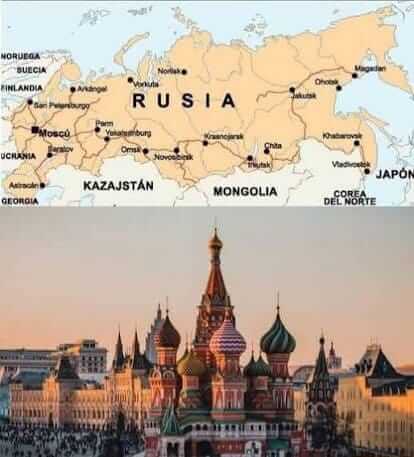
What is the Largest Country in the World? Complete Guide to Russia’s Geography, History, and Facts
Short answer: Russia is the largest country on Earth by land area, covering 17,098,242 km² and spanning 11 time zones from Eastern Europe to the Pacific. This clean, image-free guide explains its size, regions, climate, people and history—optimized for mobile reading.
Russia’s land area is 17,098,242 km² (6,601,665 sq mi). It stretches roughly 9,000 km east–west and about 4,000 km north–south across Europe and Asia. Fun fact: Russia’s surface area is slightly larger than Pluto’s (≈16.7 million km²).
1) How Big Is Russia? Clear Numbers & Comparisons
Russia is about 1.8× Canada (the #2 by area) and a little over half the size of Africa. Broadly:
- European Russia (west of the Urals): ~24% of the territory, most of the population.
- Asian Russia (Siberia & the Far East): ~76% of the territory, sparsely populated.
| Country | Land Area (km²) | Share of global land | Note |
|---|---|---|---|
| Russia | 17,098,242 | ~11% | 11 time zones |
| Canada | 9,984,670 | ~6.7% | Second largest |
| China | 9,596,961 | ~6.5% | Most populous |
| United States | 9,833,517 | ~6.6% | 50 states incl. Alaska |
| Brazil | 8,515,767 | ~5.7% | Amazon powerhouse |
2) Regions & Landscapes (From the Baltic to the Pacific)
Russia spans plains, highlands and volcanic arcs:
- North European Plain: fertile lowlands with Moscow and St. Petersburg.
- Ural Mountains: the classic Europe–Asia divide and a major mining belt.
- West Siberian Plain: one of the world’s largest lowlands, with vast wetlands and taiga forests.
- Central Siberian Plateau: tablelands carved by great rivers (Yenisei, Lena).
- Far East: Pacific rim with active volcanoes (Kamchatka) and rich fisheries.
- Caucasus: Russia’s highest peak, Elbrus (5,642 m), near the Black Sea.
3) Climate & Environment (11 Time Zones, Many Climate Zones)
Much of Russia sits in high latitudes. Expect long winters and short summers in the north, with milder and even subtropical patches along the Black Sea coast.
- Arctic & Tundra: polar deserts and permafrost coasts.
- Taiga: the world’s largest expanse of boreal forest.
- Steppe: southern grasslands forming a key grain belt.
- Mountain & Maritime: the Caucasus and the Pacific rim create local microclimates.
Environmental highlights include Lake Baikal (deepest lake on Earth; holds around 20% of unfrozen freshwater) and the Valley of Geysers in Kamchatka.
4) People & Culture
Russia’s population is roughly 146 million with a strong urban focus (Moscow and St. Petersburg dominate). Cultural exports range from ballet and classical music to literature (Tolstoy, Dostoevsky) and space science.
5) Resources & Economy (High-Level View)
Russia holds significant oil, gas, timber and mineral reserves, plus major farmland across its southern steppe. The Trans-Siberian Railway (≈9,289 km) ties European Russia to the Pacific, underscoring the logistics of managing such a vast space.
FAQ — Quick Facts
Is Russia larger than Pluto?
Answer: Yes—Russia’s surface area (~17.1 million km²) is slightly larger than Pluto’s (~16.7 million km²).
How many time zones does Russia have?
Answer: Eleven, from Kaliningrad in the west to Kamchatka in the east.
Is Russia in Europe or Asia?
Answer: Both. A smaller, populous portion lies in Europe; the larger, sparsely populated part is in Asia.
What’s the deepest lake in Russia?
Answer: Lake Baikal (1,642 m), a UNESCO site with exceptional biodiversity.
What’s the longest river entirely in Russia?
Answer: The Lena River, flowing about 4,400 km to the Arctic Ocean.
Which tool helps visualize Russia’s size vs. other countries?
Answer: Try TheTrueSize.com for map overlays, or Google Earth for 3D exploration.