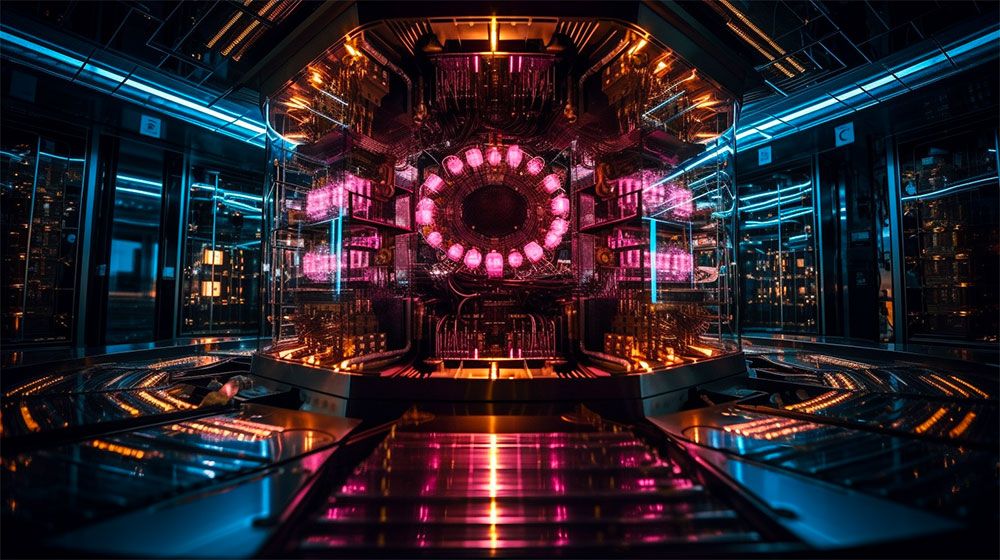
For years, quantum computers were considered futuristic laboratory experiments — impressive in theory, but far from practical. In 2025, that perception has changed dramatically. Quantum computing has crossed a critical threshold: it is now influencing real cybersecurity decisions, pushing governments to upgrade encryption, forcing corporations to rethink data protection, and shaping the global conversation about privacy, artificial intelligence and digital vulnerability.
But what exactly is a quantum computer? And more importantly — what can it actually do? Why are governments investing billions? Why is Google racing against IBM and China? And why are cybersecurity experts warning about “Q-Day,” a future moment when quantum computers could break today’s encryption systems?
This article goes deep into the current state of quantum computing, why 2025 is a turning point, how cryptography is evolving, what real threats exist, and what everyday users should know about the future of digital privacy.
What Is a Quantum Computer?
Traditional computers use bits — 0s and 1s. A quantum computer uses qubits, which can be 0, 1, or both 0 and 1 simultaneously, thanks to quantum principles like superposition and entanglement.
In the simplest terms:
- A classical bit chooses one option at a time.
- A quantum bit explores multiple possibilities at the same time.
This lets quantum computers solve certain problems exponentially faster than classical machines.
Quantum vs Classical: Why It Matters
Quantum computers are not “faster laptops.” They are good at specific tasks classical computers struggle with, such as:
- cryptography
- optimization problems
- material simulation
- molecular modeling
- AI acceleration
Their power lies not in speed alone, but in fundamentally different computing architecture.
2025: The Quantum Turning Point
Until recently, quantum computing was stuck in the “research hype” phase. In 2025, three major shifts are happening:
1. Quantum Advantage Experiments
We now have real proof that quantum systems can outperform classical ones in certain computations, not theoretically but practically.
2. Investment Explosion
Governments and tech giants are pouring billions into quantum research:
- US quantum national strategy
- EU quantum initiatives
- China’s quantum race
- Japan and South Korea quantum projects
3. Quantum Threat to Encryption
Most of our digital security relies on mathematical problems quantum computers are specifically good at solving. That means…
Quantum isn’t just innovation — it’s disruption.
Why Governments Are Terrified
Digital information is protected using encryption systems based on classical computing limitations. For example:
- RSA encryption
- ECC (elliptic curve cryptography)
- Diffie–Hellman exchanges
Quantum machines can theoretically break these systems.
That means:
- government secrets become vulnerable
- banking systems become hackable
- global communications could be intercepted
- military cybersecurity could collapse
This is why “post-quantum cryptography” is one of the biggest cybersecurity topics of the decade.
Q-Day: The Moment Encryption Dies?
Cybersecurity experts refer to a hypothetical moment called Q-Day, when quantum computers become powerful enough to break current encryption in real time.
This raises frightening questions:
- Will old encrypted data become readable instantly?
- Will banks be forced offline?
- Will private messages become public?
- Will blockchain collapse?
Some analysts believe powerful actors (including intelligence agencies) are already recording encrypted traffic today so they can decrypt it once quantum capability arrives.
Is Q-Day Close?
We are not at Q-Day yet — but we’re closer than ever. Experts estimate:
- 5–10 years for some encryption vulnerability
- 10–20 years for widespread quantum attack capability
- 30+ years for mainstream quantum computing
But history shows technology advances faster than predictions. Few people expected smartphones to dominate so quickly — and yet the world changed almost overnight.
Post-Quantum Cryptography (PQC)
To protect data from future quantum attacks, researchers are building new cryptographic systems called:
- post-quantum cryptography (PQC)
- quantum-resistant algorithms
- quantum-safe encryption
These systems are designed so that even a mature quantum computer cannot break them.
Why 2025 Matters for PQC
In 2025, international cybersecurity agencies are already transitioning to PQC standards:
- NIST post-quantum standards
- NSA transition guidance
- EU quantum cybersecurity frameworks
This is not research — this is deployment.
Quantum Computing in Artificial Intelligence
Quantum systems don’t just threaten encryption — they accelerate artificial intelligence. They can:
- optimize neural networks
- speed up training dramatically
- enable new AI capabilities
- analyze massive datasets instantly
The combination of quantum + AI is likely to be the most transformative technological partnership of the century.
Quantum in Everyday Tech
Quantum chips will eventually appear in:
- phones
- laptops
- personal devices
- home computers
Not as full quantum computers — but as hybrid processors that accelerate certain tasks.
Imagine voice assistants, translation devices, AI companions and medical diagnostics running with quantum acceleration.
Quantum for Medicine
Quantum computing could help develop:
- new drugs
- personalized medicine
- genetic treatments
- cancer therapies
Because quantum models can simulate molecular interactions with precision classical computers cannot match.
Quantum for Climate Science
The climate crisis requires complex simulation:
- predicting extreme weather
- modeling atmospheric systems
- designing renewable materials
Quantum computing might significantly accelerate climate solutions.
Quantum in Finance
Financial systems rely heavily on cryptography and mathematical models. Quantum computing will:
- detect fraud faster
- optimize portfolios
- analyze markets
But it will also threaten banking security if institutions don’t transition to quantum-safe encryption.
Quantum and Blockchain
Blockchain systems (including cryptocurrencies) depend on cryptography.
Quantum computing could theoretically:
- break digital signatures
- decode private keys
- rewrite chain history
Some blockchains are already exploring post-quantum architectures.
Quantum Internet
Yes, this is a real concept. Quantum internet uses quantum communication for:
- ultra-secure messaging
- instant encryption
- quantum entanglement-based networks
China currently leads this race with experimental quantum satellite systems.
Quantum Myths vs Reality
There are many misunderstandings about quantum computing. Let’s clarify a few:
Myth 1 — Quantum computers make normal computers obsolete
Reality:
Quantum computers complement classical computers — they don’t replace them.
Myth 2 — Quantum computers exist today at full power
Reality:
Current machines are early prototypes.
Myth 3 — Quantum is decades away
Reality:
Some quantum capability is here already, especially in cryptography testing.
The Cybersecurity Urgency
Governments and corporations are acting now because:
- encrypted data stolen today may be decrypted tomorrow
- state-level cyber warfare is escalating
- critical infrastructure is vulnerable
This is not paranoia — it’s preparation.
Quantum Risk for Individuals
Personal data is also at risk:
- health information
- banking login credentials
- private messages
- voice recordings
- cloud photos
The transition to quantum-safe encryption matters to everyone, not just governments.
What Can Users Do?
Individuals should pay attention to:
- passwordless authentication
- zero-trust systems
- post-quantum encryption products
Cyber hygiene becomes even more important in a quantum era.
The Quantum Race: Who Leads?
Currently, global quantum development is dominated by:
- United States
- China
- Europe
- Japan
Companies include:
- IBM
- Microsoft
- Alibaba
- IonQ
- Rigetti
This is not just tech competition — it’s geopolitical.
Conclusion
Quantum computing is no longer hype or distant speculation. In 2025, it is a real force shaping cybersecurity, cryptography and global technology strategy.
The coming decade will redefine:
- privacy
- security
- communication
- global power balance
Quantum computers may not be in your house for years — but they are already influencing the future of your digital life.
External Sources
- Quantum computing research whitepapers.
- Cybersecurity agency recommendations.
- Government post-quantum transition frameworks.
- Scientific publications on quantum physics and AI integration.