
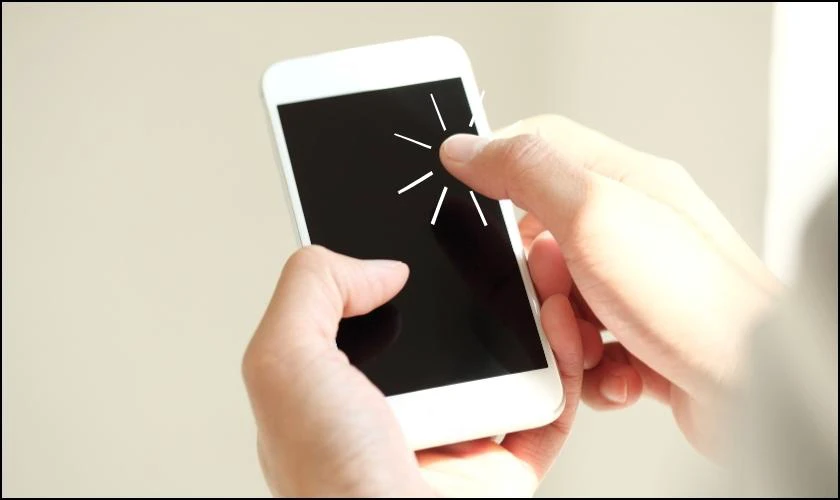
A clear technical explanation of why smartphones sometimes register touches that never happened, fail to recognize intentional taps, or respond with noticeable delay. This article explains how touchscreens work, why errors occur, and why most touch issues are not hardware failures.
Introduction: When Your Phone Doesn’t Feel Your Touch
You tap once.
The phone reacts twice.
Or not at all.
Sometimes the screen scrolls by itself.
Other times, it ignores deliberate input.
These behaviors are frustrating and often blamed on broken screens.
What Touchscreens Actually Detect
Touchscreens do not detect fingers.
They detect electrical changes.
Your finger simply alters an electric field.
Capacitive Touch Explained Simply
Most smartphones use capacitive touchscreens.
A grid of electrodes creates an electrical field.
Touching the screen disturbs that field.
Why Touch Is an Interpretation, Not a Direct Signal
The screen detects changes, not intent.
Software interprets those changes as gestures.
Interpretation introduces ambiguity.
Why Touch Input Is Probabilistic
The system evaluates:
- signal strength
- signal shape
- movement patterns
- timing
It guesses user intent based on patterns.
What Ghost Touches Really Are
Ghost touches are false positives.
The system believes a touch occurred, even when it didn’t.
The screen is not haunted.
Why Ghost Touches Happen
Ghost touches result from electrical noise, interference, or miscalibration.
The touchscreen reacts to something other than your finger.
Why Missed Taps Occur
Missed taps are false negatives.
A touch happened, but the system rejected it.
This feels like unresponsiveness.
Common Causes of Missed Taps
- weak signal due to dry skin
- screen protectors altering sensitivity
- software filtering thresholds
- high system load
The system errs on caution.
Why Touch Delays Feel Worse Than They Are
Touch latency is measured in milliseconds.
Humans are extremely sensitive to input delay.
Even small delays feel disruptive.
Why Delay Is Not Always a Touchscreen Problem
Touch detection is fast.
Response depends on:
- CPU availability
- rendering pipeline
- animation scheduling
Delay often happens after detection.
Why Heavy System Load Affects Touch Accuracy
Touch input competes with other tasks.
Under load, processing may be delayed.
Interpretation quality drops.
Why Touch Problems Appear Random
Environmental factors change.
Electrical noise fluctuates.
System load varies.
The result feels unpredictable.
Why Most Touch Issues Are Not Hardware Damage
True hardware failures are consistent.
Intermittent issues usually indicate software or environment.
This distinction matters.
Environmental Factors That Affect Touch Accuracy
Touchscreens operate within physical environments.
Changes in humidity, temperature, and electrical surroundings alter how signals behave.
Touch accuracy is not isolated from context.
Why Humidity Changes Touch Behavior
Moisture affects conductivity.
High humidity allows unintended charge paths across the screen surface.
This increases false detections.
Why Sweat and Moisture Cause Ghost Touches
Sweat contains salts.
These salts conduct electricity.
The screen detects distorted signals.
Why Moisture Looks Like Multiple Fingers
Water spreads electrical charge.
The sensor grid interprets this as multiple contact points.
Gestures become erratic.
Why Charging Can Cause Touch Issues
Charging introduces external electricity.
Poor grounding creates electrical noise.
Touch signals become unstable.
Cheap Chargers and Grounding Problems
Low-quality chargers lack proper isolation.
Noise leaks into the device.
Touch accuracy degrades noticeably.
Why Touch Issues Often Appear While Plugged In
The touchscreen reference voltage becomes noisy.
The system struggles to differentiate real input from interference.
Ghost touches increase.
Screen Protectors and Touch Sensitivity
Screen protectors introduce a physical layer between finger and sensor.
This changes signal strength.
Sensitivity must compensate.
Why Thick Protectors Cause Missed Taps
Thicker materials weaken capacitive coupling.
Light touches may fall below detection thresholds.
Taps are ignored.
Why Some Protectors Cause Ghost Touches
Poorly applied protectors trap air pockets.
These create uneven electric fields.
The system misinterprets patterns.
Why Curved Screens Are More Sensitive
Curved edges distort sensor geometry.
Edge touches are harder to interpret.
False positives increase.
Temperature Effects on Touchscreens
Temperature alters material properties.
Cold reduces conductivity.
Heat increases noise.
Why Cold Makes Screens Less Responsive
Skin conductivity drops in cold.
Signal strength weakens.
Taps are harder to detect.
Why Heat Increases Touch Errors
Heat amplifies electrical noise.
Sensor readings fluctuate.
Interpretation becomes less reliable.
Electromagnetic Interference Explained
Touchscreens are sensitive to electromagnetic fields.
Nearby electronics can introduce interference.
Accuracy suffers.
Common Sources of Interference
- poor-quality chargers
- laptop power adapters
- industrial lighting
- strong wireless transmitters
These distort touch signals.
Why Touch Issues Come and Go
Environmental conditions change constantly.
Electrical noise varies.
System behavior fluctuates.
Why Cleaning the Screen Sometimes Fixes Everything
Oils and moisture alter surface conductivity.
Cleaning restores predictable signal behavior.
Touch accuracy improves immediately.
Why Environment Matters More Than You Think
Touchscreens operate at the intersection of physics and software.
Small environmental changes produce noticeable effects.
The behavior is logical, not random.
Software Filtering: Why Not Every Touch Is Accepted
Raw touch data is noisy.
The system applies filters before deciding what counts as a real touch.
This filtering prevents chaos, but introduces trade-offs.
Why Filtering Is Necessary
Sensors detect micro-fluctuations constantly.
Without filtering, the screen would react continuously.
Stability requires rejection.
Palm Rejection Explained
Palm rejection prevents accidental input from hands resting on the screen.
It is a software decision, not a physical one.
The system guesses intent.
How the System Decides What Is a Palm
The algorithm considers:
- contact area size
- pressure distribution
- movement speed
- touch duration
Large, static contacts are often rejected.
Why Palm Rejection Sometimes Fails
Edge cases confuse algorithms.
Unusual grip positions resemble intentional input.
False positives occur.
Multi-Touch Logic and Gesture Interpretation
Touchscreens do not detect gestures.
They detect points.
Gestures are inferred over time.
How Gestures Are Built
The system tracks:
- number of contact points
- relative movement
- timing between changes
- direction consistency
Small inconsistencies can change interpretation.
Why Scrolling Sometimes Jumps
Scroll jumps occur when gesture interpretation resets.
The system may reinterpret a drag as a flick.
Content jumps unexpectedly.
Common Causes of Scroll Jumps
- momentary loss of contact
- sudden signal noise
- background load delaying input processing
- inconsistent finger pressure
The gesture state changes mid-action.
Why Touch Feels Different Across Apps
Apps can implement their own gesture handling.
Sensitivity and thresholds vary.
Consistency is not guaranteed.
System Gestures vs App Gestures
System gestures are optimized globally.
App gestures depend on developer choices.
This creates variation.
Firmware vs Operating System Responsibilities
Touch processing is split across layers.
Each layer adds interpretation.
What the Firmware Handles
- raw sensor readings
- baseline noise filtering
- hardware calibration
Firmware runs closest to the hardware.
What the Operating System Handles
- gesture recognition
- palm rejection logic
- touch-to-action mapping
- latency optimization
The OS interprets intent.
Why Updates Can Change Touch Behavior
Software updates adjust filtering parameters.
Sensitivity thresholds change.
Touch feel evolves.
Why Touch Issues Are Often Software-Specific
If problems vary by app, hardware is unlikely to be the cause.
Software interpretation dominates.
Context matters.
Why Resetting Gesture Settings Sometimes Helps
Resetting clears learned thresholds.
Default parameters are restored.
Behavior stabilizes.
Why This Layered System Is Necessary
Raw touch data is unusable.
Interpretation makes interaction possible.
Imperfection is unavoidable.
How to Diagnose Touch Problems Correctly
Diagnosing touch issues requires separating hardware symptoms from software and environmental causes.
Most problems can be narrowed down with simple observation.
Questions That Help Identify the Cause
- Does the issue happen only while charging?
- Does it occur in specific apps or everywhere?
- Is it worse in heat, cold, or humidity?
- Does cleaning the screen help?
Patterns reveal the source.
When Touch Issues Are Likely Software-Related
Software-related issues tend to be inconsistent.
They appear and disappear based on context.
Hardware failures do not behave this way.
Signs of Software or System Causes
- touch issues vary by app
- problems appear after updates
- restarts temporarily fix behavior
- issues worsen under heavy system load
When Touch Issues Point to Hardware Problems
True hardware failures are persistent.
They do not depend on environment or apps.
They worsen predictably over time.
Clear Hardware Warning Signs
- touch failure in specific screen areas
- unresponsive zones that never recover
- visible cracks or liquid damage
- touch issues immediately after physical impact
What Actually Fixes Ghost Touches
Ghost touches are usually caused by interference or noise.
Removing the source often fixes the issue.
Effective Solutions
- switch to a certified charger
- disconnect charging while testing
- remove problematic screen protectors
- clean and dry the screen thoroughly
- restart the device
These steps resolve most cases.
Why Factory Resets Rarely Fix Touch Issues
Factory resets remove user data, not physical interference.
If the cause is environmental or hardware, the issue returns.
Resets should be a last resort.
Common Myths About Touchscreen Problems
Myth: Ghost Touches Mean the Screen Is Broken
Most ghost touches are caused by noise or moisture.
Myth: Touch Issues Always Require Screen Replacement
Replacement is only necessary when hardware damage is confirmed.
Myth: More Sensitivity Is Always Better
Higher sensitivity increases false positives.
Why Touch Sensitivity Settings Are Limited
Touch sensitivity is finely balanced.
Exposing too many controls creates instability.
Systems restrict customization intentionally.
How Updates Can Improve or Worsen Touch Behavior
Software updates adjust filtering algorithms.
Some devices improve.
Others feel different.
Why Touch Issues Are More Noticeable Than Other Bugs
Touch is the primary input method.
Any inconsistency breaks immersion.
Frustration rises quickly.
A Practical Touchscreen Troubleshooting Checklist
- clean the screen and your hands
- test touch behavior while unplugged
- remove cases and protectors temporarily
- restart the device
- test across multiple apps
- check for recent updates
Frequently Asked Questions
Can humidity really cause ghost touches?
Yes. Moisture alters surface conductivity.
Why does my phone scroll by itself sometimes?
Electrical noise or moisture is often responsible.
Should I replace the screen immediately?
Only if issues are persistent and location-specific.
Do screen protectors cause touch problems?
Poor-quality or thick protectors can affect sensitivity.
Conclusion: Touchscreens Interpret Signals, Not Intent
Touchscreens rely on electrical interpretation.
Noise, environment, and software influence results.
Understanding this turns frustration into clarity.