
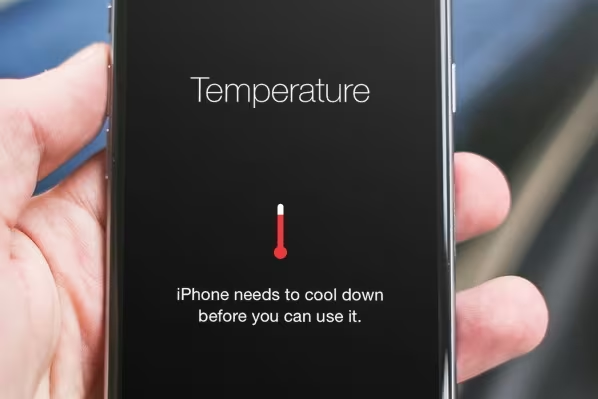
A technical explanation of why smartphones generate heat while idle, how background activity silently raises temperature, and why “not using your phone” does not mean “nothing is happening.”
Introduction: The Warm Phone Mystery
Many users notice their phone feeling warm even when untouched.
The screen is off. No apps are open. The device is resting.
Yet heat is present.
This behavior is not random. It is the result of background system activity.
Why Heat Does Not Require Active Use
Heat is a byproduct of energy consumption.
Any component that uses power generates heat.
Phones perform work even when idle.
Idle Is Not the Same as Inactive
Idle means no direct user interaction.
Inactive would mean no processing at all.
Smartphones rarely reach a fully inactive state.
Background Tasks That Run Without You Knowing
Modern operating systems schedule background work continuously.
These tasks are designed to be invisible.
Their cumulative effect produces heat.
Common Silent Background Activities
- data synchronization
- cloud backups
- analytics uploads
- system maintenance
- index rebuilding
Each task is small, but they add up.
Why Radios Generate Heat While Idle
Wireless radios remain partially active even when not transmitting data.
They listen for signals, maintain registrations, and monitor network quality.
This consumes power continuously.
Cellular, Wi-Fi, and Bluetooth Activity
Radios perform:
- network keep-alives
- signal measurements
- handoff preparation
- background scanning
Each operation contributes to heat.
Why Network Instability Increases Heat
Poor signal conditions force radios to work harder.
Transmission power increases.
Retry attempts multiply.
Heat rises accordingly.
Background Sync Storms
When multiple apps synchronize simultaneously, the system experiences a sync storm.
CPU, storage, and radios activate together.
Thermal output spikes.
Why Sync Storms Often Happen When Idle
Idle periods are ideal for background work.
The system schedules maintenance when the user is inactive.
Heat appears unexpectedly.
Why Charging Makes Idle Heating Worse
Charging removes power constraints.
The system allows more background activity.
Battery charging itself also generates heat.
Charging Plus Background Work
Charging heat combines with:
- background sync
- system updates
- data reindexing
This produces noticeable warmth.
Why Updates Run When You’re Not Using the Phone
Updates are deferred to idle periods.
This minimizes disruption.
It also concentrates activity.
Why Heat Appears Sudden
Background tasks are batched.
Heat generation increases rapidly, not gradually.
Users notice the temperature jump.
Why This Happens More on Some Days
Background workload is not constant.
Sync schedules, updates, and network conditions vary.
Heat fluctuates accordingly.
Location Services and Constant Sensor Polling
Location services remain active even when the phone is idle.
Many apps request periodic location updates in the background.
These requests wake multiple system components.
Why Location Is Expensive in Terms of Heat
Determining location involves more than GPS.
The system combines:
- GPS radio
- cell tower triangulation
- Wi-Fi scanning
- motion sensors
Each component consumes power.
Why Sensors Stay Active While Idle
Sensors such as accelerometers, gyroscopes, and proximity sensors continue sampling data.
This allows the system to detect movement or pickup.
Continuous sampling produces low but constant heat.
Motion Detection and Wake Triggers
Small movements trigger partial wakeups.
The CPU processes sensor data to decide whether to wake fully.
These wakeups prevent deep sleep.
CPU Wakeups and Partial Sleep States
Phones rarely enter full deep sleep.
Instead, they cycle between partial sleep states.
Each wakeup increases heat.
Why Partial Wakeups Add Up
Individual wakeups are brief.
Over hundreds of cycles, heat accumulates.
The device never cools fully.
Why Phones Heat Up Overnight
Overnight periods are ideal for maintenance tasks.
The system schedules heavy background work while the phone is unused.
Heat appears during sleep hours.
Common Overnight Background Activities
- photo and media backups
- app updates
- index rebuilding
- log uploads
- database optimization
These tasks run in concentrated bursts.
Background Loops and Runaway Tasks
Occasionally, background tasks fail to complete.
They retry repeatedly, creating loops.
CPU usage stays elevated.
Why Runaway Tasks Are Hard to Detect
These tasks run silently.
No app appears open.
The only symptom is heat or battery drain.
Why Heat Appears Without Battery Drain Warnings
Background activity may not exceed battery thresholds.
Heat builds gradually, while battery drains slowly.
Warnings are not triggered.
Why Some Apps Cause More Idle Heat
Apps with frequent background checks prevent deep sleep.
Location, messaging, and fitness apps are common causes.
Heat reflects cumulative activity.
Why Idle Heat Varies Day to Day
Background workload is not fixed.
Sync schedules, updates, and app behavior change.
Heat levels fluctuate accordingly.
Thermal Management Systems Explained
Smartphones include internal thermal management systems.
These systems monitor temperature continuously.
Their goal is to balance performance, safety, and comfort.
How Phones Measure Heat
Multiple thermal sensors are placed near:
- CPU and GPU
- battery
- radio modules
- charging circuits
Readings are evaluated together, not in isolation.
Why Phones Feel Hot Before They Slow Down
Performance throttling is a last-resort mechanism.
Systems tolerate moderate heat before reducing speed.
Users feel warmth before noticing lag.
Thermal Thresholds Explained
Temperature limits are defined in stages.
Early stages allow normal operation.
Higher thresholds trigger gradual throttling.
Why Throttling Is Gradual
Abrupt performance drops would break user experience.
Systems reduce frequency step by step.
Heat is managed without sudden disruption.
Battery Chemistry and Heat Generation
Batteries generate heat during charge and discharge.
Internal resistance converts electrical energy into thermal energy.
Background activity increases this effect.
Why Heat Builds Even at Low Battery Drain
Low-level constant load keeps the battery active.
Heat accumulates faster than it dissipates.
The device warms gradually.
Why Charging and Discharging Together Increases Heat
When a phone is charging while performing background tasks, heat sources overlap.
Charging circuitry and CPU activity generate heat simultaneously.
Temperature rises quickly.
Environmental Factors That Amplify Heat
External conditions strongly affect temperature.
Phones rely on passive cooling.
Heat dissipation depends on surroundings.
Common Environmental Contributors
- warm rooms
- direct sunlight
- thick phone cases
- soft surfaces like beds or sofas
- poor air circulation
These trap heat around the device.
Why Heat Feels Worse in the Hand
Human skin is sensitive to temperature changes.
Even mild warmth feels significant.
The phone may still be within safe operating limits.
Why Some Phones Run Hotter Than Others
Design choices affect thermal behavior.
Thin designs, metal frames, and powerful chips transfer heat more directly.
Heat becomes noticeable sooner.
Why Flagship Phones Are Not Immune
More powerful hardware generates more heat.
Higher performance comes with thermal trade-offs.
Efficiency helps, but does not eliminate heat.
Why Heat Is a Signal, Not a Fault
Warmth indicates background activity.
It is not always a problem.
Understanding the cause prevents unnecessary concern.
How to Reduce Idle Heating Safely
Idle heating cannot be eliminated completely, but it can be reduced significantly.
The goal is to minimize unnecessary background activity without breaking essential functionality.
Actions That Actually Reduce Heat
- limit background location access to essential apps
- disable always-on Bluetooth and Wi-Fi scanning
- review background data permissions
- avoid charging on soft or insulating surfaces
- remove thick cases during charging
These changes reduce constant wakeups.
Why Airflow Matters More Than You Think
Smartphones rely entirely on passive cooling.
Heat dissipates through the chassis and surrounding air.
Poor airflow traps heat even at low workloads.
What Users Should Not Do
Some common reactions make the problem worse.
- using aggressive task killers
- constantly force-stopping system apps
- installing “cooling” or “booster” apps
- blocking all background activity blindly
These actions destabilize normal system behavior.
Why Task Killers Increase Heat Long-Term
Killing background tasks forces them to restart.
Restart cycles use more CPU than stable execution.
This increases heat instead of reducing it.
When Idle Heat Is Normal
Light warmth during idle is expected under certain conditions:
- after installing or updating apps
- during cloud backups
- while charging
- during overnight maintenance
Temporary warmth is not a fault.
When Idle Heat May Indicate a Problem
Heat may require attention if it is:
- persistent for many hours
- accompanied by rapid battery drain
- present immediately after a restart
- noticeably worse than usual
These signs suggest runaway background activity.
Why Restarting Helps With Heat
Restarting clears:
- stuck background loops
- sensor polling chains
- radio state anomalies
- unfinished system jobs
Temperature often drops shortly after reboot.
A Practical Idle Heat Reduction Checklist
- check location permissions regularly
- avoid charging in warm environments
- keep the phone on hard, flat surfaces
- remove heavy cases during long idle charging
- restart occasionally if idle heat persists
Frequently Asked Questions
Is it dangerous if my phone feels warm when idle?
No. Warmth alone is normal. Safety systems activate long before damage occurs.
Can idle heat damage the battery?
Prolonged high heat accelerates battery aging, but mild warmth does not cause immediate harm.
Why does idle heat vary from day to day?
Background workload, updates, and network conditions change daily.
Does airplane mode stop idle heating?
It reduces radio activity, but background processing can still generate heat.
Conclusion: Idle Heat Reflects Invisible Activity
A warm phone does not mean malfunction.
It reflects background processing, radio activity, and system maintenance.
Understanding these causes helps distinguish normal behavior from real issues.