
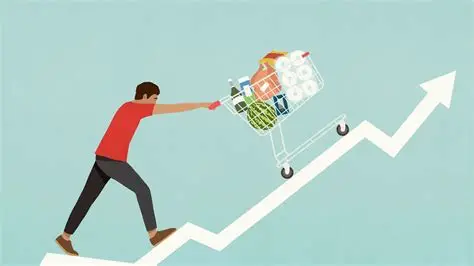
An in-depth exploration of why modern life feels financially heavier, even when spending habits haven’t changed.
Introduction: The Feeling That Money Doesn’t Go as Far Anymore
Many people share the same quiet thought: “I don’t understand how everything feels so expensive now.” Bills are paid, income may be stable, spending habits haven’t dramatically changed — and yet, there is a constant sensation that money disappears faster than before.
This feeling is not always explained by inflation alone. While prices have increased in many areas, the emotional weight of spending has also changed. What we are experiencing is not only an economic shift, but a psychological one.
This article explores why modern life feels more expensive than it actually is, how perception plays a major role in financial stress, and why even small purchases now feel heavier than they used to.
Perception vs. Reality: Feeling Poorer Without Being Poor
Feeling financially strained does not always mean having less money. Often, it means that money feels less sufficient.
This difference is crucial. Financial stress is deeply influenced by perception, expectations, and comparison — not just numbers.
When daily life constantly reminds us of what we could or “should” afford, satisfaction decreases, even if basic needs are met.
The Fragmentation of Spending
One major reason everything feels more expensive is how spending has changed. In the past, expenses were fewer and more visible. Today, spending is fragmented into dozens of small, recurring payments.
Subscriptions, apps, digital services, automatic renewals, delivery fees, and micro-payments quietly drain money without creating a clear sense of value.
According to Harvard Business Review, fragmented spending increases financial stress because the brain struggles to track cumulative costs.
Why Small Purchases Feel Heavier Than Big Ones
Surprisingly, small daily expenses often feel more stressful than larger planned purchases. A coffee, a delivery fee, or an app upgrade triggers more discomfort than a big expense that was expected.
This happens because:
- small costs feel endless
- they lack emotional satisfaction
- they accumulate silently
- they reduce perceived control
The result is a constant sense of financial leakage.
The Psychological Weight of “Invisible” Inflation
Even when price increases are modest, repeated exposure to higher costs changes how people emotionally relate to money.
Groceries, utilities, transport, and basic services increase gradually, creating a background stress that rarely feels dramatic but never fully disappears.
According to the American Psychological Association, chronic low-level financial stress can significantly impact mental wellbeing, even when income is stable.
Social Comparison Makes Everything Feel More Expensive
Social media has radically changed how people perceive spending. We are constantly exposed to lifestyles that appear effortless, curated, and financially comfortable.
This exposure shifts expectations. Normal spending begins to feel insufficient, while discretionary purchases feel emotionally risky.
The pressure is not always conscious — but it strongly influences how expensive life feels.
The Loss of Financial “Breathing Room”
In the past, many people had buffer zones: spare money, slower spending cycles, or fewer fixed costs.
Modern life is filled with obligations. When most income is already assigned before it arrives, spending feels constrained and stressful.
Even small unexpected costs can feel overwhelming in this context.
Why Digital Payments Make Money Feel Less Real
Paying digitally removes physical cues associated with spending. There is no exchange of cash, no visible reduction, no pause.
This makes money feel abstract, while emotional discomfort increases afterward when balances are checked.
Research cited by Psychology Today shows that abstract spending increases anxiety and regret.
The Emotional Cost of Constant Budget Awareness
Modern tools encourage constant financial monitoring. While awareness can be helpful, it can also create tension.
When every purchase is immediately visible, spending stops feeling neutral and starts feeling judgmental.
This emotional layer makes everything feel more expensive than it objectively is.
Why Life Feels Expensive Even When Spending Is Rational
- more fixed monthly costs
- less financial flexibility
- higher emotional expectations
- constant comparison
- invisible cumulative spending
Together, these factors create a persistent sense of financial pressure.
What Actually Helps Reduce the Feeling of Financial Heaviness
1. Reducing Fragmented Spending
Fewer subscriptions and micro-payments increase clarity and control.
2. Creating Psychological Buffers
Small financial margins reduce emotional stress more than large budgets.
3. Separating Needs From Noise
Not all spending pressure comes from real necessity.
4. Reducing Comparison Exposure
Less lifestyle comparison improves financial satisfaction.
External References
American Psychological Association – Financial Stress
Harvard Business Review – Consumer Psychology
Psychology Today – Money & Behavior
Investopedia – Cost of Living
FAQs
Is everything actually more expensive?
Some prices have increased, but perception plays a major role.
Why do small expenses feel so stressful?
Because they accumulate and reduce perceived control.
Does digital spending increase stress?
Yes. It removes physical spending cues.
Can financial stress exist without debt?
Yes. Emotional pressure does not require financial crisis.
Conclusion
The feeling that everything is more expensive is not only about money. It is about perception, structure, and emotional context.
Understanding why life feels financially heavier helps reduce guilt, anxiety, and confusion — and allows for more intentional choices in a complex modern environment.