
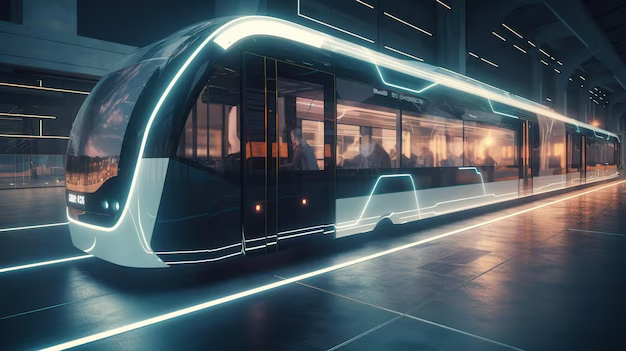
A comprehensive exploration of the rapid transformation of public transportation systems in 2025 and beyond — analyzing electric mobility, bike-sharing, scooter infrastructure, sustainability, urban planning, regulations, and the cultural shift toward micro-mobility.
Introduction: A Global Mobility Shift
Public transportation is undergoing one of the most significant transformations in modern history. Rising fuel prices, environmental concerns, and urban congestion are pushing cities worldwide toward sustainable, electric, and micro-mobility solutions. Bikes, scooters, and other lightweight vehicles are no longer fringe alternatives — they are becoming core components of transportation policy.
According to the International Energy Agency, electric mobility adoption has accelerated globally, with rapid increases in e-bikes, e-scooters, and electric vehicles.
Why Micro-Mobility Is Rising in Popularity
Micro-mobility — transportation using lightweight, small vehicles such as bikes, scooters, and e-bikes — is rising because it addresses multiple urban challenges at once. Cities face congestion, pollution, limited parking, and energy demands. Micro-mobility offers solutions that are low-carbon, efficient, and adaptable.
The key drivers include:
- reduced emissions
- lower operating costs
- short-distance convenience
- flexibility in dense cities
- public health benefits from active transportation
Urban planners are rethinking mobility ecosystems, prioritizing bike lanes and pedestrian zones.
Bikes and E-Bikes: The Backbone of the Shift
Traditional bicycles remain a dominant mode of micro-mobility, but electric bikes are accelerating the shift. E-bikes enable longer commutes, less physical strain, and greater accessibility for individuals with limited fitness.
The European Parliament has cited e-bikes as a crucial component of EU sustainability goals, reducing reliance on cars for short trips.
Scooters and E-Scooters: Short-Distance Transportation
Scooters and e-scooters fill a critical gap in transportation — distances too long to walk but too short for traditional public transit. Shared e-scooter programs have exploded in popularity in the last decade.
Their benefits include:
- immediate on-demand access
- low cost per ride
- low emissions
- reduced city congestion
Cities worldwide are adapting infrastructure to support shared scooter programs.
Electric Vehicles and Shared Mobility
Electric vehicles — including buses, shuttles, and ride-sharing fleets — are central to modern transportation strategies. Public transit systems now incorporate electric buses, decreasing emissions and improving air quality.
The U.S. Environmental Protection Agency highlights the reduced greenhouse gas emissions associated with electric mobility.
Sustainability and Environmental Impact
Transportation accounts for a major portion of global CO₂ emissions. Transitioning to electric and micro-mobility options significantly decreases environmental impact. Cities adopting low-emission mobility strategies experience:
- improved air quality
- lower noise pollution
- reduced reliance on fossil fuels
- increased walkability and cycling
Organizations such as the World Health Organization emphasize the health benefits of reduced pollution exposure.
Urban Planning and Infrastructure Transformation
The rise of bikes, scooters, and electric vehicles directly influences urban planning. Cities are redesigning streets to include protected bike lanes, pedestrian zones, and designated parking hubs for shared scooters and bikes.
Examples include:
- dedicated micro-mobility lanes
- charging stations
- shared parking bays
- traffic-calming zones
- car-free districts
Urban planners focus on multimodal integration — allowing commuters to switch from bus to bike or scooter seamlessly.
Regulation, Safety, and Governance
The rapid rise of micro-mobility has forced cities and governments to adapt regulatory frameworks. Issues including helmet laws, speed limits, parking zones, insurance, and street design remain ongoing policy discussions.
Regulatory priorities include:
- reducing accidents and collisions
- protecting pedestrian safety
- preventing sidewalk clutter
- encouraging responsible riding
- ensuring accessibility for all users
Organizations like the U.S. Department of Transportation provide public safety guidelines for micro-mobility.
Accessibility and Inclusive Mobility
The future of transportation must also address accessibility for disabled and elderly individuals. While micro-mobility offers convenience, inclusivity remains a challenge.
Cities are exploring:
- wider bike lanes to accommodate adapted bikes or wheelchairs
- subsidized programs for low-income riders
- audio-signal crosswalks
- universal design principles
The World Health Organization Accessibility Guidelines emphasize inclusive urban mobility as a public health priority.
Funding and Policy Innovation
Governments are experimenting with public–private partnerships to fund micro-mobility solutions. Shared mobility services lower infrastructure costs for cities by shifting maintenance to operators.
Examples of funding strategies include:
- mobility taxes
- green infrastructure grants
- corporate partnerships
- subscription-based micro-mobility programs
Global Comparisons: City Models and Success Stories
Different regions lead the micro-mobility revolution in unique ways. For example:
- Amsterdam: cycling infrastructure dominates daily commuting
- Copenhagen: protected bike lanes and urban planning models
- Paris: expansion of car-free districts and bike-sharing
- Seoul: integrating smart mobility data systems
- San Francisco: electric mobility hubs and ride-sharing
These examples showcase how policy, culture, and geography shape transportation innovation.
The Economics of Micro-Mobility
The micro-mobility industry fuels new economic sectors — manufacturing, maintenance, app development, logistics, and charging infrastructure. Job creation spans urban design, engineering, and public policy.
According to the Global Wellness Institute, wellness-oriented transportation contributes to tourism, retail, and public health cost savings.
Last-Mile Delivery and Logistics
Delivery services have embraced micro-mobility to solve “last-mile” challenges. Bikes and scooters allow couriers to navigate dense urban environments quickly and affordably.
Companies are deploying:
- cargo bikes
- electric delivery scooters
- micro-warehouses
- app-coordinated route mapping
This shift reduces traffic congestion and emissions from traditional delivery trucks.
Cultural Adoption and Public Perception
Cultural attitudes strongly influence adoption. Younger generations embrace micro-mobility for convenience, cost savings, and environmental values. Older generations may require more infrastructure and safety assurances to adopt.
Media coverage, influencer campaigns, and government messaging shape public trust and enthusiasm.
Tourism and Micro-Mobility
Tourism sectors increasingly integrate e-bike and e-scooter rentals into city experiences. Visitors gain convenient access without relying on rental cars.
Popular tourism applications include:
- guided e-bike tours
- app-based bike-share access
- micro-mobility passes included in hotel stays
Tourism boards promote micro-mobility as eco-friendly sightseeing.
Charging Infrastructure and Battery Innovation
As electric mobility grows, charging infrastructure becomes crucial. Cities are deploying fast-charging stations for e-scooters, bikes, and electric vehicles. Innovations such as swappable batteries reduce downtime for shared fleets and delivery vehicles.
Battery technology continues to evolve, with research focused on:
- solid-state batteries
- fast-charge capacity
- longer cycles
- recyclability and sustainability
The U.S. Department of Energy highlights battery research as pivotal for transportation sustainability.
Smart Mobility and Data Integration
Smart mobility integrates real-time data with transportation systems — allowing users to locate vehicles, view battery levels, reserve parking, or map efficient routes. Smart systems also help cities regulate fleets and manage street usage.
Data-driven platforms support:
- real-time traffic mapping
- fleet distribution
- predictive maintenance
- emission tracking
- safety alerts
Urban vs Rural Adoption
Micro-mobility adoption varies by region. Urban areas adopt quickly due to congestion and short-distance travel. Rural areas, however, focus on electric vehicles for longer commutes and terrain adaptability.
Challenges for rural adoption include:
- limited charging infrastructure
- long commute distances
- reliance on private vehicles
Hybrid models combining EV buses and micro-mobility hubs may bridge gaps.
Weather, Terrain, and Seasonal Constraints
Weather significantly affects micro-mobility adoption. Cold winters reduce scooter and bike ridership, while warm climates support year-round usage.
Infrastructure responses include:
- covered bike lanes
- heated pathways
- seasonal fleet adjustments
- weather-resistant batteries and motors
Manufacturers are exploring durable materials and all-weather designs.
Health, Fitness, and Public Well-Being
Micro-mobility brings secondary health benefits. Cycling and scooter commuting encourage physical activity, weight control, cardiovascular health, and stress reduction.
Organizations such as the CDC Physical Activity Center recommend active commuting as part of daily movement goals.
Community and Social Impact
Micro-mobility fosters community interaction, creating shared spaces and reducing car dependency. Streets designed for cycling and walking encourage social engagement, promote local businesses, and improve neighborhood safety through traffic calming.
Public spaces designed for pedestrians and cyclists support stronger community identity.
Sustainability Metrics and Environmental Impact
Measuring environmental benefits requires accurate metrics. Cities track reductions in:
- CO₂ emissions
- traffic congestion
- noise pollution
- fuel consumption
According to IPCC climate reports, transport emissions are a key factor in global warming trends.
Materials and Design: The Next Generation
Future micro-mobility devices are incorporating sustainable materials such as recycled aluminum, carbon composites, and biodegradable plastics. Durable components increase lifespan and reduce waste.
Design trends prioritize:
- lightweight frames
- replaceable batteries
- foldable models
- ergonomic controls
- enhanced safety features
Social Equity and Mobility Justice
For micro-mobility to become a true cornerstone of public transportation, it must meet equity standards. Access to affordable bikes, scooters, and electric mobility should not be restricted to affluent districts or central urban areas.
Equity-focused policies include:
- subsidized rides for low-income communities
- discounted memberships
- infrastructure in underserved neighborhoods
- accessibility requirements
Organizations like the Transportation for America emphasize mobility justice as a key factor in urban planning.
Funding Models and Public–Private Partnerships
The future of transportation relies on innovative funding strategies. Public–private partnerships reduce financial barriers for governments while scaling services efficiently.
- subscription-based micro-mobility
- advertising-funded fleets
- corporate-sponsored charging systems
- government incentives and green bonds
Multimodal Transportation Systems
Micro-mobility is most effective when integrated with existing public transit: buses, metros, rail, and ride-sharing. Seamless multimodal systems reduce private car dependency and extend the reach of traditional transit.
Examples include:
- buses with bike racks
- train stations with shared mobility hubs
- apps coordinating mixed-mode routes
- last-mile e-scooter docking
Cargo and Freight Micro-Mobility
Micro-mobility is no longer limited to personal commuting. Cargo bikes and electric freight scooters are transforming delivery services, reducing reliance on trucks in urban centers.
Benefits include:
- reduced emissions
- lower operational costs
- access to pedestrian zones
- less congestion
Artificial Intelligence and Predictive Systems
AI integration allows real-time fleet management, predictive maintenance, safety alerts, and dynamic pricing. Mobility apps analyze demand patterns to reposition fleets and reduce waiting times.
Emerging AI capabilities include:
- traffic prediction
- autonomous scooters and delivery robots
- battery health monitoring
- collision detection systems
Legal Frameworks and Liability Concerns
Laws governing micro-mobility are evolving. Questions remain regarding liability in accidents: riders, operators, or municipalities may be responsible depending on jurisdiction.
Legal frameworks also address:
- helmet requirements
- age limits
- drunk or distracted riding
- insurance obligations
Emerging Markets and Global South Adoption
Developing regions may adopt micro-mobility differently. In dense megacities with limited car infrastructure, bikes and scooters provide affordable and efficient transportation options.
International development organizations see micro-mobility as a tool for economic participation.
Economic and Tourism Impact
Shared mobility supports tourism, retail, cafes, and entertainment hubs. Cities that invest in cycling and scooter infrastructure often experience increased foot traffic and local business revenue.
Studies from the OECD highlight economic benefits tied to pedestrian and cycling zones.
Micro-Mobility as a Cultural Movement
Micro-mobility is no longer simply a transportation mode — it is becoming a cultural identity. Riders associate micro-mobility with sustainability, independence, health, and innovation. This cultural shift aligns with emerging generational values.
Frequently Asked Questions (Extended)
Are bikes and scooters truly viable replacements for cars?
In dense urban environments, yes. They are not full replacements for long-distance travel, but they effectively support short commutes, reduce congestion, and complement public transit. Micro-mobility is most impactful when integrated with trains, buses, and shared EVs.
Do e-scooters and e-bikes reduce emissions?
Electric mobility significantly reduces CO₂ emissions compared to gasoline-powered vehicles. Emissions vary depending on electricity sources, but overall carbon footprints remain lower.
Will scooters and bikes remain seasonal?
Weather affects adoption, but innovations such as heated lanes, weather-resistant batteries, and urban shelters are extending seasonal viability. In warmer regions, year-round usage is already common.
What about pedestrian safety?
Pedestrian safety remains a core concern. Infrastructure — protected lanes, designated parking areas, and smart traffic signals — reduces accidents. Education and regulation also contribute significantly.
Are shared mobility programs affordable?
Costs vary. Subscription-based models and government subsidies improve affordability. Equity programs support access for low-income communities.
Will autonomous micro-mobility become mainstream?
While fully autonomous scooters and bikes remain experimental, AI and predictive systems already play major roles in fleet management, route planning, and maintenance.
How will cities adapt?
Cities will continue redesigning roads, parking, and public spaces. The most successful models integrate micro-mobility with transit rather than treating it as a standalone system.
Is micro-mobility just a trend?
No. Adoption is driven by global concerns — emissions, congestion, affordability, accessibility — which ensures sustainability beyond trend cycles.
Conclusion: A Transportation Revolution in Motion
The future of public transportation is not defined by a single technology or mode — but by integration, sustainability, and accessibility. Micro-mobility solutions such as bikes, scooters, and electric vehicles reflect a shift toward cleaner, more inclusive, and healthier cities.
This transition is driven by public demand, environmental necessity, and technological innovation. As charging infrastructure expands, AI improves fleet efficiency, and cities redesign streets for safety and accessibility, micro-mobility will evolve from convenient alternative to essential service.
By embracing multimodal ecosystems, governments and communities can reduce emissions, improve quality of life, and support economic resilience. Micro-mobility offers not only a pathway to greener transportation — but a reimagining of public space itself.
The coming decade will determine how effectively cities integrate these tools, foster equity, and build resilient, inclusive, and interconnected transportation systems. This movement represents more than a shift in technology — it is a fundamental transformation in how we live, travel, and experience our urban environments.