
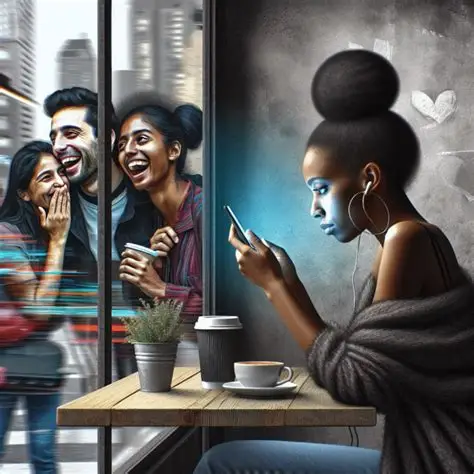
In the early days of social media, technology was sold as the great connector – a tool that would bring humanity closer, allow us to share our lives more openly and build communities across borders. But in 2025, evidence suggests the opposite is happening. Despite being more connected than at any point in human history, people are reporting record levels of loneliness, anxiety and disconnection. Psychologists call it “the digital loneliness epidemic,” a modern paradox at the center of our hyper-connected world.
This phenomenon goes deeper than simple screen addiction. It affects emotional development, human bonding, romantic relationships, social trust, and even the way we interpret our own identity and worth. Technology didn’t just enter our lives—it reshaped the way we exist within them.
Why Are We Lonelier Than Ever?
To understand digital loneliness, we need to understand its origins. The modern internet replaced slow, meaningful interaction with short bursts of stimulation. We don’t talk—we scroll. We don’t bond—we consume. We don’t build relationships—we accumulate notifications.
1. Too Many Connections, Not Enough Intimacy
Most people have hundreds or thousands of online contacts, yet struggle to identify more than one or two real emotional support figures in their lives. The network expanded while intimacy contracted.
2. Passive Watching Replaced Active Participation
Instead of sharing life experiences with others, we observe other people’s lives through curated feeds. Social media turned us into spectators rather than participants in human connection.
3. Digital Comparison and Self-Worth
When every moment is measured against filtered perfection, self-esteem collapses. Feelings of inadequacy isolate people in their internal narratives—even when surrounded by millions online.
How Social Media Triggers Emotional Isolation
The architecture of digital platforms is designed around engagement—not well-being. Algorithms reward attention, not connection; controversy, not empathy; performance, not authenticity.
- Likes become currency
- Followers become validation
- Notifications become emotional substitutes
- Digital approval becomes more powerful than real bonding
Over time, these systems train the brain to seek connection through superficial consumption rather than meaningful interaction.
The Neuroscience of Digital Loneliness
Neurologically, loneliness isn’t simply “being alone”—it’s the absence of emotional nourishment. It’s possible to feel lonely even in a crowded room, and paradoxically, possible to feel deeply connected in silence with someone you trust.
Digital platforms stimulate dopamine (pleasure), but rarely oxytocin (bonding). The brain becomes conditioned to chase stimulus rather than intimacy.
The result?
People become overstimulated yet emotionally undernourished.
Why Zoom, Messaging and Notifications Don’t Fix Loneliness
Text-based communication lacks facial expression, body language, tone, and emotional nuance. Even video calls lack the subtle synchrony of in-person interaction.
We communicate more frequently but less meaningfully.
- shorter messages
- shallower emotional content
- performative expressions of care
“Are you okay?” is replaced by an emoji. “Let’s talk” is replaced by a reaction. Meaning becomes compressed to symbols.
Why Young People Are the Loneliest Generation
Studies show Gen Z is the most digitally connected generation—and at the same time, the loneliest in measurable history.
Why? Because for many, digital communication replaced physical social development:
- less eye contact
- less physical presence
- less emotional exposure
- more online self-comparison
The result is a generation fluent in digital vocabulary but less confident in emotional expression.
Digital Loneliness and Mental Health
Loneliness correlates strongly with:
- anxiety
- depression
- insomnia
- addiction behaviors
- self-isolation patterns
The brain interprets loneliness as a threat, triggering stress responses that compound over time.
The Paradox of Constant Availability
One might assume that always being reachable would reduce loneliness—but digital access increases pressure instead:
- fear of missing out
- social comparison
- performance anxiety
- emotional exhaustion
Many users report feeling more isolated after long scrolling sessions than before they picked up the phone.
Why Digital Relationships Often Feel “Not Enough”
Digital affection lacks the sensory dimensions of in-person interaction:
- tone
- smell
- eye contact
- physical proximity
- energetic presence
Humans evolved for embodied connection—technology abstracts that connection into symbols and pixels.
AI Avatars, Digital Companions and Synthetic Presence
In 2025, AI-driven emotional companions are exploding in popularity. Many people use:
- AI girlfriends
- AI boyfriends
- therapeutic companions
- AI chat partners
But here’s the paradox:
The more synthetic connection we use, the more natural connection we often lose.
AI can mimic empathy—but cannot replace human presence.
When Technology Helps Loneliness
This isn’t all negative. Technology can improve well-being when used consciously:
- video calls with loved ones far away
- support groups
- mental health communities
- friendship apps
The key is intention. Not consumption—connection.
How to Break the Digital Loneliness Cycle
1. Prioritize real voice and video
If texting replaces conversation, emotions stay underneath.
2. Seek spaces for honest emotional dialogue
3. Limit passive scrolling
4. Practice digital boundaries
5. Cultivate presence offline
Loneliness is healed through vulnerability, not connectivity.
Conclusion
In 2025, society faces a silent epidemic hidden behind screens. Our feeds are full. Our hearts are not. The future depends on a new digital philosophy—one that prioritizes emotional intelligence over technological expansion.
More connection should not mean less humanity.
External Sources
- Studies on digital loneliness, emotional health and online behavior.
- Research from psychiatry associations and digital well-being institutes.
- Reports on generational mental health trends and technology use.