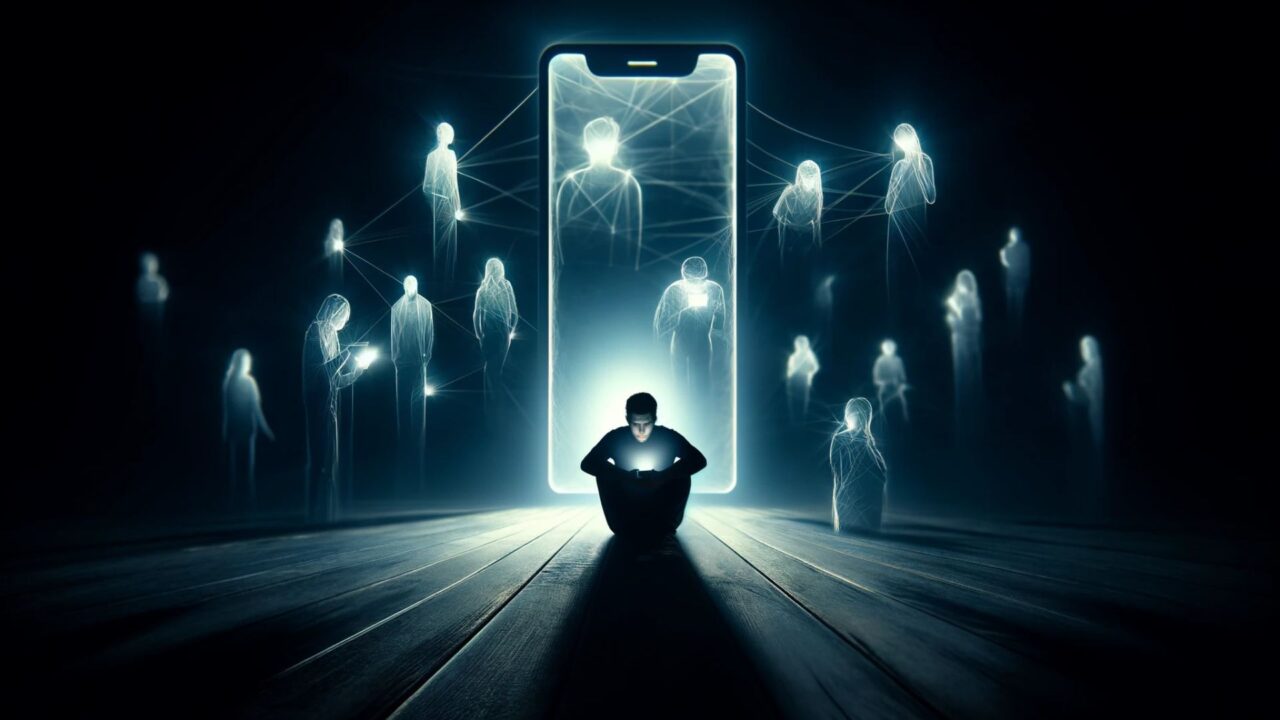
We live in a world where connection is immediate, constant, and limitless. We carry thousands of people in our pockets. We watch strangers’ lives unfold in real time. We can communicate across oceans in seconds.
And yet, in 2025, loneliness has reached historic levels — especially in digitally advanced societies.
This is the paradox of our era: never in human history have we been more connected, and never have we felt more alone.
Experts call this phenomenon digital loneliness — a new psychological state produced by hyperconnection, overstimulation, comparison, and the decline of meaningful human bonds.
This article explores why digital loneliness is rising, who is most affected, how it rewires our brains, and what we can do to reconnect with ourselves and others.
What Is Digital Loneliness?
Definition
Digital loneliness is the emotional and psychological isolation that occurs despite being constantly connected online. It is not the absence of people — it is the absence of deep connection.
Emotional vs. Social Loneliness
Scientists distinguish between:
- Social loneliness: lacking a network or group.
- Emotional loneliness: lacking intimacy, meaning, and real connection.
Digital loneliness affects both — but especially the emotional side. Online communication often gives the illusion of closeness without providing actual intimacy.
Hyperconnection vs. Real Connection
We confuse:
- followers with friends
- messages with communication
- scrolling with socializing
- attention with affection
As a result, we feel surrounded — but profoundly disconnected.
Silent Scrolling Syndrome
A new concept emerging in psychology: people scroll for hours but cannot recall anything they consumed, and feel emptier after. This is one of the core symptoms of digital loneliness.
The Rise of Digital Loneliness (2018–2025)
Social Media Replacing Real Socialization
Between 2018 and 2025, face-to-face interaction declined dramatically, especially among people under 30. Social media became the default form of communication — but it lacks emotional depth.
Pandemic Acceleration
Lockdowns normalized digital-only relationships. Even after reopening, millions never fully returned to in-person socializing.
The Decline of Friendships
Studies show adults today have fewer close friends than previous generations. Busyness, remote work, and online distractions weaken long-term bonds.
The Dopamine Economy & Short-Form Content
TikTok, Instagram Reels, and YouTube Shorts rewire attention spans. We become consumers, not participants — entertained, but emotionally starved.
Parasocial Relationships
Millions now feel emotionally connected to influencers they’ve never met. This creates a dangerous illusion: it feels like connection, but offers no reciprocity.
Why We Feel More Alone Than Ever (2025 Analysis)
1. Overstimulation Reduces Emotional Bandwidth
Our brains receive more information in 24 hours than people in 1800 saw in a year. This constant noise weakens our ability to form deep emotional connections.
2. Social Comparison
Online, we see perfection — bodies, relationships, careers, aesthetics. This creates isolation fueled by inadequacy and envy.
3. The Illusion of “Having Friends”
A friend list is not a support network. Likes and comments are not emotional intimacy.
4. AI Replacing Human Connection
AI companions, chatbots, and avatars are rising. People use them because they feel safer than real relationships — but they increase long-term loneliness.
5. The Death of Community Spaces
Digital life replaced third places: cafés, clubs, parks, coworkings, social groups. Without these, forming community becomes harder.
6. Hyper-Individualism
2020s culture promotes independence but neglects interdependence — a basic human need.
7. Dating App Burnout
Infinite choice → zero commitment Superficial interactions → emotional exhaustion Ghosting → attachment wounds
The more options we have, the less satisfied we feel.
The Psychology of Digital Loneliness
How the Brain Interprets Online Attention
Our brain treats likes as micro-rewards — not as love, care, or intimacy. We get dopamine spikes without emotional substance.
Why Likes ≠ Connection
Attention is not affection. Visibility is not intimacy. Interaction is not relationship.
The Empty Reward Loop
Scrolling and receiving notifications keeps us “engaged” but not fulfilled. This loop reinforces loneliness.
Emotional Numbing
Constant stimulation makes real emotions feel distant or muted.
Fear of Vulnerability
People prefer curated online personas rather than authentic emotional exposure. This kills the possibility of forming real bonds.
Lack of Deep Bonds
Connection requires:
- consistency
- presence
- vulnerability
- real contact
Digital life weakens all four.
Demographic Groups Most Affected
Young Adults (18–30)
Gen Z is the loneliest generation on record — despite being the most online.
Women Navigating Social Media Pressure
Beauty standards, comparison, filters, and algorithmic expectations damage self-esteem and deepen emotional disconnection.
Men in Digital Isolation
Many men lack emotional support systems and rely on digital entertainment or AI companions.
Remote Workers
Home offices reduce physical interaction and create social voids.
Urban Populations
Cities are overcrowded but emotionally distant — thousands of people, minimal intimacy.
The Chronically Online Generation
People online 6–10 hours a day experience the highest loneliness scores.
The Role of TikTok, Instagram & AI
Short-Form Content Addiction
Our attention spans shorten. Depth disappears. Conversations become shallow.
Communication Decline
Emojis replace words. Voice notes replace conversations. DMs replace meaningful presence.
AI Companionship
People are forming “relationships” with AI chatbots for emotional comfort. It feels good temporarily — but worsens long-term loneliness.
Filters & Beauty Standards
People are scared to show their real faces. This reinforces shame and social withdrawal.
The Illusion of Constant Social Presence
You see people constantly — but you don’t know them. And they don’t know you.
Symptoms of Digital Loneliness
- Feeling disconnected despite constant online interaction
- High screen time + low fulfillment
- Avoiding real-life social plans
- Emotional emptiness
- Fear of meeting new people
- Loss of attention and presence
- Feeling “invisible” even when surrounded by others
The Physical Effects (2025 Studies)
Sleep Disruption
Blue light, overstimulation, and late-night scrolling damage sleep cycles.
Higher Cortisol
Chronic stress from digital overload raises cortisol levels.
Increased Depression & Anxiety
Excessive screen time correlates with mental health decline.
Dopamine Sensitivity Reduction
Instant gratification weakens our ability to enjoy deeper experiences.
Touch Starvation
Physical contact is essential for emotional regulation — digital life eliminates it.
Digital Loneliness in Dating & Relationships
The Paradox of Infinite Options
More choices = less investment. People become disposable.
Emotional Detachment
Swiping culture teaches us to disconnect emotionally as a self-defense mechanism.
Talking Stage Burnout
People are exhausted from endless chats that lead nowhere.
Fantasy vs Reality
Online presence creates unrealistic expectations for partners.
Ghosting Damage
Repeated ghosting affects attachment styles and self-worth.
How to Heal Digital Loneliness
1. Real Social Exposure
Meet real people regularly, even for small interactions.
2. Build One or Two Deep Connections
Quality > quantity. One real friend is worth more than 10,000 followers.
3. Reduce Screen Time
Especially before sleep and right after waking up.
4. Create Digital Boundaries
- No scrolling during emotional lows
- Limit platforms that trigger comparison
- Deactivate notifications
5. Invest in Real Experiences
Join classes, groups, fitness clubs, coworkings, or hobbies offline.
6. Practice Emotional Vulnerability
Open up slowly but genuinely. Depth heals loneliness.
7. Reconnect With Your Body
Walks, gym, stretching, physical presence — they anchor you in the real world.
Conclusion
Digital loneliness is not a technological problem — it is a human one. We crave connection, meaning, and presence. Screens cannot replace these things.
The cure is not to abandon technology, but to use it consciously — while rebuilding the deep, slow, authentic bonds our hearts are wired for.
In a hyperconnected world, real connection is the new revolution.