How fingerprints, facial recognition, voice data, and other biometric systems quietly became part of daily life — and why that matters more than most people realize.
Introduction: When Your Body Became a Password
Not long ago, unlocking a device or accessing an account required something external: a password, a key, or a card.
Today, the most common form of access is the human body itself.
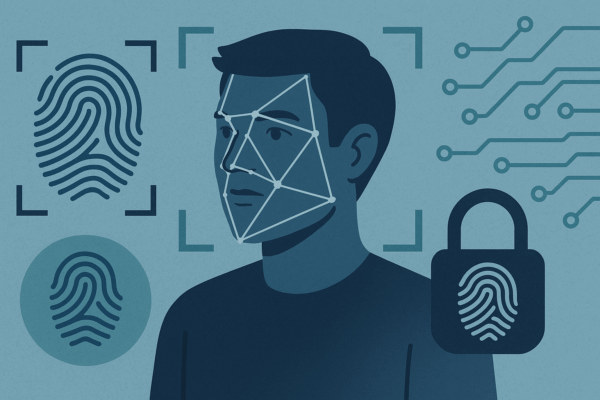
Fingerprints, facial recognition, voice commands, and even walking patterns are now used to identify people across devices, services, and physical spaces.
This shift happened quickly and with little public discussion.
What Biometric Data Actually Is
Biometric data refers to measurable physical or behavioral characteristics used to identify an individual.
Unlike passwords, biometric identifiers are:
- unique to the individual
- always present
- difficult or impossible to change
This makes biometric systems both highly convenient and uniquely sensitive.
Common Types of Biometric Data
Modern technology uses several categories of biometric identifiers.
- fingerprints
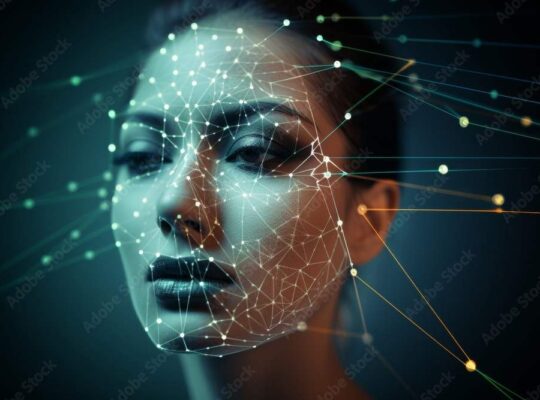
- facial geometry
- voice patterns
- iris and retina scans
- hand and palm recognition
- behavioral biometrics such as typing rhythm
Many users interact with multiple biometric systems every single day without actively thinking about it.
How Biometric Technology Became Everyday Technology
Biometric identification was once limited to high-security environments such as government facilities or border control.
Today, it is embedded in consumer devices designed for speed and convenience.
The Smartphone as the Turning Point
Smartphones normalized biometrics.
Fingerprint sensors and facial recognition were marketed as faster, safer alternatives to passwords.
Adoption increased rapidly because the technology felt helpful, not invasive.
Where Biometric Data Is Used Today
Biometric systems now operate across many aspects of daily life.
- unlocking phones and laptops
- banking and payment authentication
- workplace access control
- airport security and border checks
- smart home devices
- customer verification services
In many cases, opting out is difficult or impractical.
Why Biometric Data Feels Safer Than It Actually Is
Biometric security feels intuitive and personal.
People assume that something tied to their body must be more secure than a password.
This assumption is only partially true.
The Illusion of Control
Biometric systems create a sense of control and ownership.
In reality, once biometric data is stored, users rarely know:
- where it is kept
- how long it is stored
- who can access it
- how it may be reused
Why Biometric Data Is Different From Other Personal Data
If a password is compromised, it can be changed.
If biometric data is compromised, the individual carries that risk permanently.
This permanence is what makes biometric data uniquely sensitive.
The Growing Scale of Biometric Data Collection
As biometric systems become more common, data collection scales rapidly.
One person may have their biometric data stored by:
- device manufacturers
- app developers
- employers
- financial institutions
- government agencies
Each additional system increases exposure.
How Biometric Data Is Stored
One of the most misunderstood aspects of biometric technology is data storage.
Users often assume that biometric information remains safely inside their devices.
In reality, storage methods vary significantly depending on the system.
On-Device Storage
Some modern devices store biometric data locally.
This means fingerprints or facial data never leave the device itself.
On-device storage reduces exposure, but does not eliminate risk entirely.
Centralized Storage Systems
Other systems store biometric data in centralized databases.
These databases may be operated by:
- companies
- financial institutions
- government agencies
- third-party service providers
Centralization increases efficiency, but also creates larger security targets.
Templates vs Raw Biometric Data
Biometric systems rarely store raw images or recordings.
Instead, they convert biometric traits into mathematical templates.
These templates are then compared during authentication.
Why Templates Still Carry Risk
While templates are not photographs, they still represent unique biometric patterns.
If compromised, templates cannot be replaced like passwords.
Who Owns Your Biometric Data?
Ownership of biometric data is rarely clear to users.
In many cases, users grant access without fully understanding the long-term implications.
User Consent and Legal Language
Consent is often obtained through terms and conditions.
These documents frequently:
- lack clear explanations
- use vague language
- allow data reuse
- limit user control
Once accepted, reversing consent may not fully remove stored data.
The Biometric Data Lifecycle
Biometric data moves through a lifecycle that most users never see.
This lifecycle includes:
- collection
- processing
- storage
- use
- retention
- potential deletion
Why Deletion Is Rarely Absolute
Even when deletion is requested, backups and secondary systems may retain biometric templates.
This makes complete erasure difficult to guarantee.
How Biometric Data Is Shared
Biometric data may be shared across systems for convenience or security.
This includes sharing between:
- apps and operating systems
- devices within ecosystems
- companies and partners
Each data transfer increases exposure.
Why Biometric Systems Are Hard to Audit
Unlike passwords, biometric processes are invisible to users.
This lack of transparency makes it difficult to verify security claims.
The Convenience-Security Tradeoff
Biometric systems succeed because they remove friction.
However, reduced friction often comes at the cost of reduced awareness.
Convenience quietly shifts control away from users.
What Happens When Biometric Data Is Compromised
Data breaches are no longer rare events.
While passwords and emails can be reset or replaced, biometric data cannot.
This fundamental difference changes the long-term consequences of security failures.
Why Biometric Breaches Are Different
When biometric identifiers are exposed, the affected individual carries the risk permanently.
There is no equivalent to changing a fingerprint or face.
Real-World Biometric Data Breaches
Over the past decade, biometric databases have been compromised across multiple sectors.
These incidents involved:
- fingerprint records
- facial recognition templates
- voice authentication systems
- access control databases
In many cases, affected users were never informed clearly.
The Long-Term Risks of Biometric Exposure
Biometric exposure does not always result in immediate harm.
The risk increases over time as biometric systems become more widespread.
Future Misuse of Old Data
Data collected today may be repurposed years later.
Advances in recognition algorithms can extract new value from previously stored templates.
Biometric Technology and Surveillance Expansion
One of the most debated aspects of biometric adoption is its role in surveillance.
Facial recognition systems are increasingly deployed in public and semi-public spaces.
From Security to Monitoring
Technologies introduced for safety or convenience can gradually shift toward monitoring and tracking.
This transition often occurs without explicit user consent.
The Normalization of Biometric Tracking
As biometric systems become routine, resistance decreases.
What once felt intrusive begins to feel normal.
Why Normalization Matters
Normalization reduces scrutiny.
Systems expand quietly when they are no longer questioned.
Biometric Bias and Accuracy Issues
Biometric systems are not neutral.
Accuracy varies based on:
- lighting conditions
- device quality
- age-related changes
- skin tone and facial features
Errors can lead to exclusion or misidentification.
When Biometric Systems Fail
Failures often occur silently.
Users may experience:
- denied access
- false rejections
- increased monitoring
Appeals or corrections are rarely simple.
The Ethical Questions Around Biometric Tech
Biometric technology raises ethical concerns beyond technical security.
These concerns involve:
- consent
- power imbalance
- transparency
- long-term societal impact
Why Regulation Often Lags Behind Technology
Technological adoption moves faster than legislation.
This creates gaps in accountability and protection.
How Individuals Can Reduce Biometric Exposure
Avoiding biometric technology entirely is increasingly difficult.
However, individuals can take steps to reduce unnecessary exposure and regain some control.
Choosing When Biometrics Are Necessary
Not every service requires biometric authentication.
Users can:
- disable biometrics for non-critical apps
- use strong passwords or PINs instead
- avoid biometric logins for low-risk services
Understanding Device-Level Controls
Modern operating systems offer tools to manage biometric access.
These tools allow users to:
- see which apps use biometric data
- revoke access selectively
- delete stored biometric templates
Reviewing these settings regularly reduces unnoticed exposure.
Limiting Biometric Data Across Ecosystems
Device ecosystems often share data across phones, tablets, and computers.
Disabling cross-device biometric sync can significantly reduce risk.
When Biometric Use Makes Sense
Biometric systems are not inherently harmful.
They can be appropriate for:
- device unlocking
- local authentication
- limited, offline verification
Problems arise when biometric data is centralized or reused without transparency.
A Practical Biometric Safety Checklist
- review biometric permissions regularly
- avoid enrolling biometrics in unnecessary services
- prefer on-device biometric storage
- disable biometric sharing across platforms
- stay informed about data breaches
- use alternatives where possible
Awareness is the strongest form of protection.
Frequently Asked Questions
Is biometric data safer than passwords?
Biometric data can be convenient, but it cannot be changed once compromised, making long-term risk higher.
Can biometric data be deleted?
Deletion depends on the system. In many cases, full deletion cannot be independently verified.
Do companies sell biometric data?
Policies vary. Some companies share data with partners, often disclosed in legal documents.
Is facial recognition always biometric?
Facial recognition becomes biometric when data is stored and used for identification, not simple image processing.
Should biometric use be regulated more strictly?
Many experts argue that stronger regulation is necessary due to the permanence of biometric identifiers.
Conclusion: Convenience Should Not Replace Awareness
Biometric technology has quietly reshaped how identity works in the digital world.
While it offers convenience, it also introduces permanent risks that are rarely discussed.
Understanding how biometric systems function is essential for making informed choices in an increasingly automated society.