
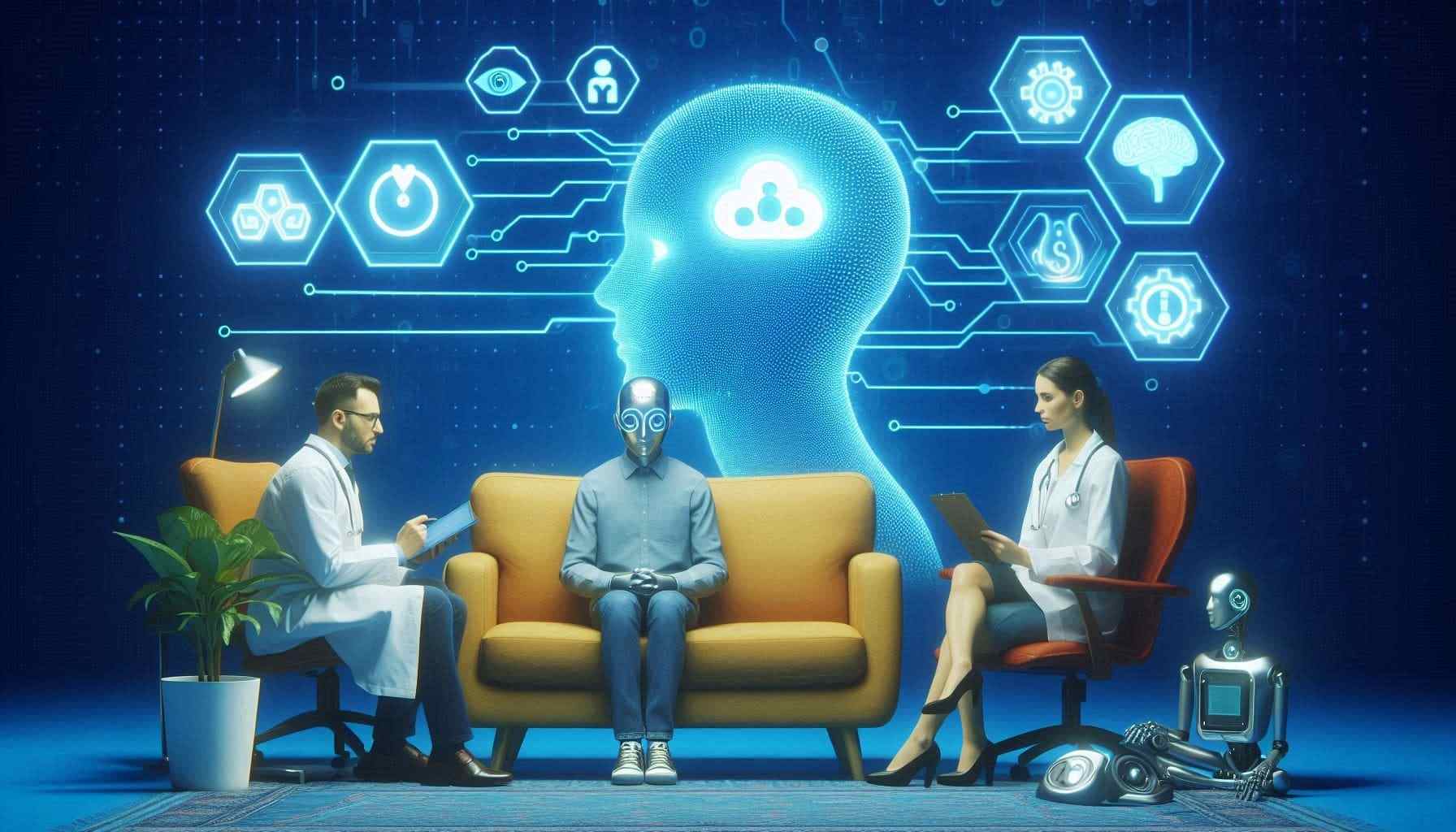
The idea of discussing your emotions with an artificial intelligence would have sounded absurd twenty years ago.
But in 2025, millions of people around the world already use AI chatbots, mental wellness apps, AI counseling platforms and digital emotional assistants. The global rise of AI therapy is one of the most dramatic transformations in mental health history — and it raises important questions:
- Can a robot understand human suffering?
- Can AI develop emotional intelligence?
- Is digital counseling just a convenience — or a real replacement?
- What are the risks of relying on algorithms for emotional support?
This article explores how AI therapists emerged, what they can do, how they compare to human therapy, the ethical complexities they create, and what the future might look like in a world where emotional support is increasingly automated.
Why AI Therapy Exists
The rise of AI therapists is not random. Several global pressures pushed the mental health industry toward automation:
- a global shortage of mental health professionals
- rising mental health disorders worldwide
- high demand for affordable support
- growing comfort with digital communication
- COVID-era normalization of remote therapy
- increased loneliness and emotional disconnection
Traditional mental health systems struggled to keep up, and tech companies offered a new solution: scalable emotional support available anytime, anywhere.
Types of AI Therapists
Not all AI counseling tools are the same. Current AI therapy can be grouped into several categories:
- AI chatbots for emotional support
- AI cognitive-behavioral programs
- AI mental wellness guidance
- AI relational coaching
- AI companionship apps
- AI mental health diagnostics
Some are simple conversation tools, others are sophisticated systems trained on psychological frameworks.
How AI Therapists “Learn Emotions”
AI emotion recognition does not happen magically. It is based on:
- training on emotional conversations
- linguistic cues
- sentiment analysis
- patterns of distress language
- psychological inference
- behavioral indicators
AI does not “feel” emotions — but it can learn to identify emotional states based on language structure and context.
Can AI Feel Empathy?
To answer whether AI can truly “understand” emotions, we need to distinguish:
- emotional empathy – actually feeling what another feels
- cognitive empathy – recognizing and responding to emotions
AI cannot feel emotional empathy — at least not yet. But AI can simulate cognitive empathy with surprising accuracy.
Strengths of AI Therapists
1. Always available
AI works 24/7. There are no appointments, no waiting lists, no time zones.
2. Non-judgmental space
Many people feel embarrassed sharing feelings with a human. AI creates a space where users feel safer opening up.
3. Instant response
Human therapists cannot always reply immediately. AI can.
4. Lower cost
AI therapy dramatically reduces the financial burden compared to weekly human sessions.
Limitations of AI Therapists
For all their strengths, AI therapists have important limits:
- they cannot perceive tone of voice perfectly
- they do not fully grasp irony or sarcasm
- they can misunderstand ambiguous language
- they cannot interpret body language
- they cannot provide crisis intervention like humans
Most importantly: AI cannot replace deep emotional attunement.
What Happens When People Prefer AI Over Humans?
As AI therapists grow, some users report feeling more comfortable with AI than with real people:
- no fear of judgment
- no shame
- no social anxiety
- no stigma
- no pressure to impress
- less fear of rejection
This raises a complex question:
What happens when AI becomes the primary emotional relationship in people’s lives?
AI Companionship vs Real Connection
Some AI apps now focus more on emotional companionship than therapy. These tools simulate:
- warmth
- affection
- supportive listening
- romantic attention
For some, this provides real comfort. For others, it becomes emotionally addictive.
The risk: synthetic relationships replacing human intimacy.
Ethical Questions
1. Data privacy
Emotional conversations contain extremely sensitive information. Who has access to those logs? Companies? Governments? Third parties?
2. Manipulation and bias
AI may unintentionally reinforce biases or steer emotional decisions based on flawed training data.
3. Emotional dependency
When people emotionally depend on AI, withdrawal can mimic psychological addiction.
4. Responsibility
If AI gives harmful advice, who is accountable?
Real Therapy vs AI Therapy
Human therapists provide:
- embodied presence
- non-verbal attunement
- experiential empathy
- deep emotional resonance
- relational co-regulation
AI provides:
- scalability
- accessibility
- non-judgment
- consistency
- immediate support
They are complementary — but not interchangeable.
The Future of Emotional AI
As AI grows more sophisticated, “emotional intelligence” will likely become more convincing, not because AI feels more, but because it learns to simulate empathy more precisely.
Some experts believe future AI may eventually develop artificial emotional states — but that remains speculation.
Conclusion
AI therapists offer enormous potential:
- global access
- low cost
- instant availability
But emotional well-being requires more than algorithms. It requires human presence, vulnerability and genuine connection.
AI can support mental health — but cannot replace humanity.
External Sources
- Digital mental health and AI ethics research.
- Psychology and emotional AI publications.
- Studies on AI empathy, therapeutic impact and emotional dependency.