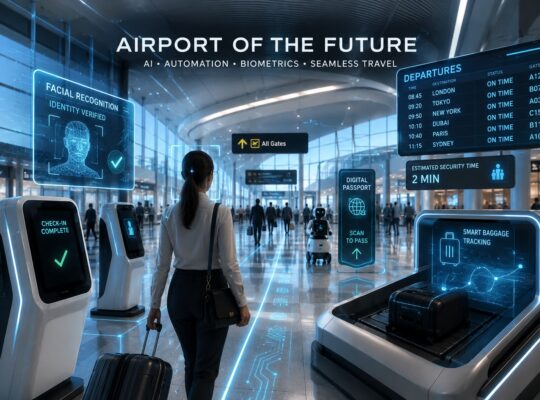

Technology is more advanced than ever. Systems predict our needs. Interfaces are smoother. Automation reduces effort. And yet, many people feel more mentally scattered, less certain, and more confused than before. This article explores why technological intelligence has increased while human clarity has quietly declined.
Introduction: When Progress Does Not Feel Like Progress
Everything is faster.
Everything is optimized.
Everything is designed to be easier.
Yet decision-making feels harder.
Understanding feels thinner.
Mental certainty feels rare.
This contradiction is not accidental.
Smarter Technology, Less Human Clarity
Technological systems have become extraordinarily capable.
They calculate faster, predict better, and automate complex processes.
But human cognition has not evolved at the same pace.
Why Intelligence and Understanding Are Not the Same
Intelligence refers to processing power.
Understanding requires integration.
Modern technology optimizes the first while quietly eroding the second.
The Illusion of Effortless Living
Technology promises ease.
Friction is removed.
Steps are skipped.
But effortlessness has a cognitive cost.
What We Lose When Everything Becomes Automatic
When processes are invisible, understanding weakens.
We get results without context.
Knowledge becomes shallow.
Why Delegating Thinking Creates Confusion
Many decisions are no longer made consciously.
Algorithms choose routes, content, priorities, and timing.
Humans follow outputs without fully understanding inputs.
The Cost of Invisible Decision-Making
When you do not see how decisions are made, you cannot evaluate them.
Trust replaces comprehension.
Confusion grows quietly.
Why Convenience Reduces Cognitive Engagement
Convenience minimizes effort.
But effort is how the brain builds models of reality.
Without effort, mental maps remain incomplete.
Understanding Requires Participation
Passive consumption does not create insight.
Interaction does.
Many modern tools remove interaction in the name of speed.
The Rise of Surface-Level Knowledge
Information is abundant.
Context is scarce.
People know facts, but struggle to explain systems.
Why Knowing More Does Not Mean Understanding More
Facts without structure overwhelm.
The mind needs hierarchy and connection.
Technology delivers fragments, not frameworks.
How Speed Undermines Meaning
Speed compresses reflection.
Reflection is where meaning forms.
Without pauses, clarity cannot stabilize.
The Cognitive Gap We Rarely Talk About
Technology advances linearly.
Human integration is nonlinear.
This gap produces confusion, not failure.
This Is Only the Beginning of the Problem
Confusion is not caused by ignorance.
It is caused by mismatch.
The deeper mechanisms are still unfolding.
Automation Without Understanding
Automation is designed to remove effort.
But effort is how humans build comprehension.
When effort disappears, understanding often follows.
The Hidden Trade-Off of Smart Systems
Smart systems perform tasks flawlessly.
They reduce friction and save time.
But they also hide process.
Humans receive outcomes without seeing reasoning.
Why People Feel Lost Using “Smart” Tools
Many modern tools are powerful but cognitively opaque.
Users interact with interfaces, not systems.
Understanding stops at the surface.
When Interfaces Replace Mental Models
Interfaces simplify interaction.
But they also replace internal reasoning.
People stop asking why things work.
Cognitive Offloading and Mental Erosion
Cognitive offloading occurs when thinking is delegated to technology.
Calendars remember. Maps navigate. Algorithms decide.
The brain adapts by doing less.
Why Offloading Feels Helpful but Creates Fragility
Offloading reduces immediate strain.
But it weakens internal systems over time.
When tools fail, people feel helpless.
The Problem of Invisible Logic
Algorithms operate on logic users never see.
Decisions arrive without explanation.
Humans accept outcomes they cannot evaluate.
Why Opaque Systems Increase Confusion
Transparency creates trust through understanding.
Opacity creates dependence.
Dependence breeds uncertainty.
Real-Life Examples of Confusion by Design
Confusion is rarely intentional.
It emerges as a side effect of optimization.
Navigation Apps
People follow directions without learning geography.
When routes change, orientation collapses.
Recommendation Algorithms
Content is curated automatically.
Users lose awareness of choice architecture.
Preferences feel externally shaped.
AI-Assisted Decision Tools
Outputs are trusted because they appear intelligent.
Underlying assumptions remain unknown.
Humans struggle to challenge results.
Why More Information Does Not Reduce Confusion
Information without structure overwhelms.
Technology delivers volume, not hierarchy.
Confusion is a processing problem, not a data problem.
Speed Replaces Sense-Making
Decisions are made faster.
Reflection is shortened.
Understanding never consolidates.
Why People Feel Less Confident Despite Better Tools
Confidence requires comprehension.
When reasoning is externalized, confidence erodes.
People rely but do not trust themselves.
This Confusion Is Systemic, Not Personal
Feeling lost is not user failure.
It is a predictable outcome of design choices.
The system shapes the experience.
Why Clarity Declines as Systems Become Smarter
As systems grow more intelligent, they require less human input.
Less input means less engagement.
Less engagement weakens understanding.
The Paradox of Intelligent Assistance
Assistance removes cognitive strain.
But it also removes the opportunity to build internal structure.
Clarity depends on that structure.
Dependency vs Autonomy
Smart technology encourages reliance.
Reliance reduces decision practice.
Decision confidence declines over time.
Why Reliance Feels Comfortable but Weakens Agency
Delegating decisions reduces friction.
But agency is built through repetition.
When decisions disappear, agency fades.
The Confidence Gap
People have access to better tools than ever before.
Yet confidence in personal judgment is declining.
This gap is structural, not emotional.
Why Confidence Requires Understanding
Confidence is not optimism.
It comes from knowing how and why.
When systems hide reasoning, confidence cannot stabilize.
When Technology Becomes the Authority
Tools increasingly present outputs as final.
Suggestions feel like conclusions.
Humans stop interrogating results.
The Psychological Shift of Deferring Judgment
Deference reduces responsibility.
Responsibility is uncomfortable.
Over time, people stop wanting it.
The Long-Term Cognitive Consequences
Reduced engagement reshapes cognition.
Skills that are unused weaken.
Interpretation becomes harder.
What Happens When Sense-Making Declines
People rely on signals instead of reasoning.
They follow cues rather than principles.
Confusion increases under uncertainty.
Why More Automation Does Not Equal More Freedom
Freedom requires understanding.
Automation removes effort but not dependence.
Dependence limits autonomy.
The Illusion of Control Through Optimization
Optimized systems feel controlled.
But control without comprehension is fragile.
When systems fail, confusion spikes.
Why Confusion Is the Rational Response
Humans are navigating systems they did not design and do not fully understand.
Confusion is adaptive, not a flaw.
This Is the Cost of Invisible Intelligence
Intelligence without visibility undermines clarity.
The smarter the system, the more explanation it requires.
Most systems provide less.
How to Regain Clarity in a World of Smart Technology
Clarity does not come from rejecting technology.
It comes from changing how we relate to it.
The solution is not less intelligence, but more human participation.
Principles That Restore Cognitive Clarity
- prioritize understanding over speed
- re-engage with decision-making processes
- question outputs instead of accepting them
- slow down critical thinking moments
- rebuild internal mental models
These principles restore agency.
Why Slowing Down Selectively Matters
Not everything needs to be slow.
But thinking does.
Speed without reflection creates confusion.
From Passive User to Active Interpreter
Technology should assist, not replace interpretation.
Humans must remain meaning-makers.
Otherwise, outputs feel arbitrary.
Simple Ways to Reclaim Interpretation
- ask how a result was generated
- compare algorithmic suggestions with intuition
- avoid default settings when possible
- retrace automated steps occasionally
- treat outputs as hypotheses, not truths
Why Better Design Needs More Transparency
Intelligent systems require explanation.
Without transparency, trust becomes blind dependence.
Clarity depends on visibility.
The Future of Technology Is Interpretability
The next evolution is not smarter tools.
It is more explainable ones.
Intelligence must be legible to humans.
Why Confusion Is a Design Signal
Confusion indicates misalignment.
It signals that systems have outpaced understanding.
Listening to confusion improves design.
What Healthy Tech Use Actually Looks Like
It is not digital detox.
It is conscious engagement.
Technology should extend cognition, not replace it.
Frequently Asked Questions
Is technology making people less intelligent?
No. It is changing how intelligence is expressed and used.
Why do smart tools sometimes feel overwhelming?
Because they reduce effort but increase cognitive opacity.
Can automation coexist with human clarity?
Yes. But only when systems are transparent and interpretable.
Is confusion a personal weakness?
No. It is a rational response to opaque systems.
Conclusion: Smarter Systems Require Smarter Relationships
Technology is not the enemy.
Unexamined dependence is.
When humans remain active interpreters, clarity returns — even in complex systems.