
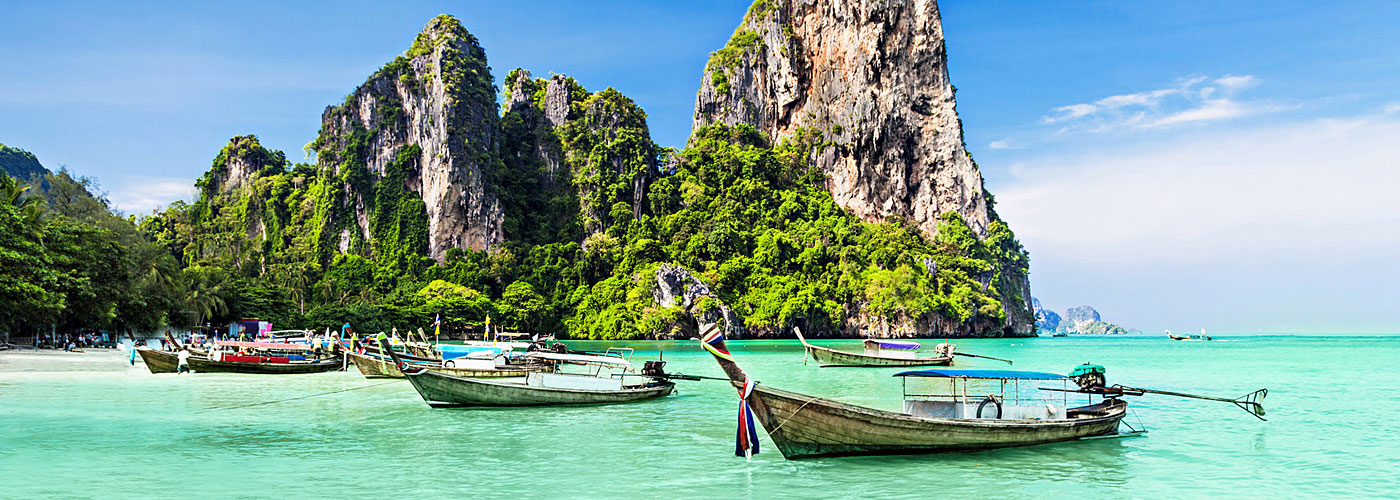
In 2026, Thailand remains a top destination for digital nomads seeking affordable living, stunning beaches, vibrant culture, and reliable WiFi. With the new Destination Thailand Visa (DTV) making long-term stays easier, thousands of remote workers flock here annually. But is it right for you? This ultimate digital nomad Thailand 2026 guide covers everything: visa requirements, cost breakdowns, tax implications, best spots, pros/cons, and practical advice to thrive.
Whether you’re a freelancer eyeing Chiang Mai’s co-working scene or a tech pro dreaming of Phuket sunsets, we’ll help you plan. Updated with January 2026 data from official sources like the Thai Embassy and expat communities, this is your one-stop resource. Let’s turn your nomad dreams into reality.
Why Thailand for Digital Nomads in 2026?
Thailand’s appeal hasn’t faded: fast internet (average 200-500 Mbps in cities), low costs (live comfortably on $1,000-2,000/month), and a welcoming expat community. In 2026, post-pandemic recovery has boosted co-working spaces and nomad events. Plus, the DTV visa simplifies stays up to 180 days per entry, renewable for 5 years.
Stats from Nomad List (2026): Thailand ranks #1 in Southeast Asia for nomads, with Chiang Mai scoring 4.8/5 for livability. But challenges like heat, traffic, and evolving taxes exist— we’ll cover them all.
Digital Nomad Visa in Thailand: Requirements & How to Apply (2026 Update)
The digital nomad visa Thailand is officially the Destination Thailand Visa (DTV), launched in 2024 and refined by 2026. It allows remote workers to stay legally without tourist visa runs.
Key Requirements for DTV Visa
- Age: At least 20 years old.
- Employment: Proof of remote work (employment contract, freelancer invoices, or company letter confirming remote status).
- Financial Proof: Bank balance of at least 500,000 THB (~$14,400 USD) for 3 months prior, or annual income of $80,000 USD (some sources note $40,000 with $250,000 Thai investment).
- Health Insurance: Coverage of at least $100,000 USD for medical expenses in Thailand.
- Passport: Valid for 6+ months.
- Other: Clean criminal record; family (spouse/kids under 20) can join with extra docs.
How to Apply Step-by-Step
- Gather documents: Passport, proof of employment/income, bank statements, insurance policy.
- Apply online or at a Thai embassy/consulate in your home country (e.g., via Thai Embassy site).
- Pay fee: ~10,000 THB (~$290 USD) per applicant.
- Wait for approval: 2-4 weeks; e-visa sent via email.
- Enter Thailand: Stamp at airport for 180-day stay; extend once for another 180 days at immigration (~1,900 THB).
Validity: 5 years, multiple entries. Source: Fragomen 2025, Greenback Tax. Alternatives: Tourist visa (60 days + 30 extension) or Elite Visa for high-earners.
Cost of Living in Thailand for Digital Nomads (2026 Breakdown)
Thailand’s cost of living for digital nomads is budget-friendly, averaging $1,000-2,000/month depending on lifestyle and location. Updated 2026 figures show slight inflation but still cheaper than Europe/US.
Average Monthly Costs (Single Nomad)
| Category | Budget (\( /month) | Comfort ( \)/month) | Notes |
|---|---|---|---|
| Rent (1-bed apartment) | 300-500 | 600-1,000 | Chiang Mai cheaper; Bangkok/Phuket higher (8,000-25,000 THB). |
| Food (eating out + groceries) | 200-400 | 500-700 | Street food $2-5/meal; Western cafes $10+. |
| Utilities/Internet | 50-100 | 100-150 | High-speed WiFi $20-30/month. |
| Transport (scooter/taxi) | 50-100 | 150-300 | Grab rides $1-5; scooter rental $100/month. |
| Co-working/Gym | 100-200 | 200-300 | Co-working $100-200/month. |
| Health Insurance/Misc | 50-100 | 100-200 | Basic expat policy $50/month. |
| Total | 750-1,400 | 1,650-2,650 | Excludes visa/flights. |
Sources: Koh Chang Guide, Reddit nomad threads (2025). In Chiang Mai, live on $1,000; Bangkok needs $1,500+ for comfort.
Taxes for Digital Nomads in Thailand: What You Need to Know (2026 Rules)
Taxes for digital nomads in Thailand got stricter post-2024 reforms. Key: You’re a tax resident if staying >180 days/year, taxing remitted foreign income at 0-35% (progressive).
Tax Basics
- Non-Residents (<180 days): No Thai tax on foreign income.
- Residents (>180 days): Tax on income remitted to Thailand in the same year earned (e.g., no tax if earned 2025, remitted 2026).
- Rates: 0% (<60,000 THB), up to 35% (>5M THB).
- DTV Holders: File if Thai bank account; but per attorneys, no remittance = no tax (Reddit insights 2025).
- US/EU Nomads: Double taxation treaties may apply; use FEIE for US expats.
Tips: Keep funds offshore, remit only necessities. Consult pros like Bright Tax or Greenback. 2026 change: New VAT on imports from first baht.
Best Places in Thailand for Digital Nomads (2026 Top Picks)
Thailand offers diverse spots. Here’s the best places in Thailand for digital nomads based on WiFi, community, costs:
- Chiang Mai: Nomad capital – affordable ($800-1,500/month), 100+ co-works, cafes, mountains. Score: 4.8/5 Nomad List.
- Bangkok: Urban vibe, fast WiFi, networking events. Costs $1,200-2,000/month; great for startups.
- Phuket/Koh Lanta: Beach life, diving. $1,000-1,800/month; balanced work/play.
- Koh Tao: Emerging island fave (2026) – diving, chill vibes, $900-1,500/month.
- Pai: Mountain retreat, creative scene. Budget $700-1,200/month; slower pace.
Sources: Blond Travels, Casa Basilico.
Pros and Cons of Being a Digital Nomad in Thailand
Pros
- Affordable everything: Food, housing, travel.
- Strong community: Meetups, Facebook groups (e.g., Digital Nomads Thailand).
- Visa ease with DTV.
- Diverse landscapes: Cities to islands.
- Fast WiFi & co-works (e.g., Punspace in Chiang Mai).
Cons
- Heat/humidity: 30-35°C year-round.
- Tax complexities for long-stayers.
- Air pollution (Chiang Mai burning season).
- Language barrier outside cities.
- Visa runs if not on DTV.
Essential Tips for Digital Nomads in Thailand 2026
- Internet: Get AIS/True SIM ($10/month unlimited).
- Health: Buy SafetyWing insurance ($42/month).
- Transport: Use Grab app; rent scooter carefully.
- Community: Join Nomad List Slack or local FB groups.
- Work Setup: Co-works like Yellow Coworking (Chiang Mai, $150/month).
- Culture: Learn basic Thai; respect temples/monarchy.
- Safety: Low crime, but watch scams/traffic.
FAQ – Digital Nomad Thailand 2026
What is the digital nomad visa in Thailand?
The DTV: 5-year multiple-entry, 180 days per stay (extendable). Requirements: 20+ years, remote job, 500k THB savings or $80k income.
How much does it cost to live as a digital nomad in Thailand?
$750-2,650/month: Budget in Chiang Mai ~$1,000; luxury in Phuket ~$2,000. Includes rent, food, WiFi.
Do digital nomads pay taxes in Thailand?
No if <180 days or no remitted income. Residents (>180 days) tax remitted foreign earnings at 0-35%. Offshore accounts help.
What are the best places for digital nomads in Thailand?
Chiang Mai (community), Bangkok (urban), Phuket/Koh Lanta (beaches), Koh Tao (islands), Pai (mountains).
Is Thailand safe for digital nomads?
Yes: Low violent crime, but beware petty theft, scams. Women nomads report feeling safe in cities.
What’s the internet like for remote work?
Excellent: 200+ Mbps averages; co-works have backups. Use VPN for security.
Can families be digital nomads in Thailand?
Yes: DTV includes spouse/kids; international schools in Bangkok/Chiang Mai ($500-1,000/month/child).
How to avoid tax residency?
Stay <180 days/year; don't remit income same year earned. Consult Thai tax attorney.
Best time to visit as a nomad?
Nov-Feb: Cool/dry. Avoid Mar-May (hot) or Chiang Mai burning season (Feb-Apr).
Digital nomad communities in Thailand?
Facebook: Digital Nomads Thailand (50k+ members); events in Chiang Mai like Nomad Summit.
Conclusion: Is Thailand Your Next Digital Nomad Hub?
In 2026, Thailand offers unbeatable value for digital nomads: easy visas, low costs, epic spots. Start with Chiang Mai for community, track expenses, and navigate taxes wisely. Ready to pack? Apply for DTV today and join the thousands thriving here.
Have nomad tips or questions? Comment below – let’s build the community!